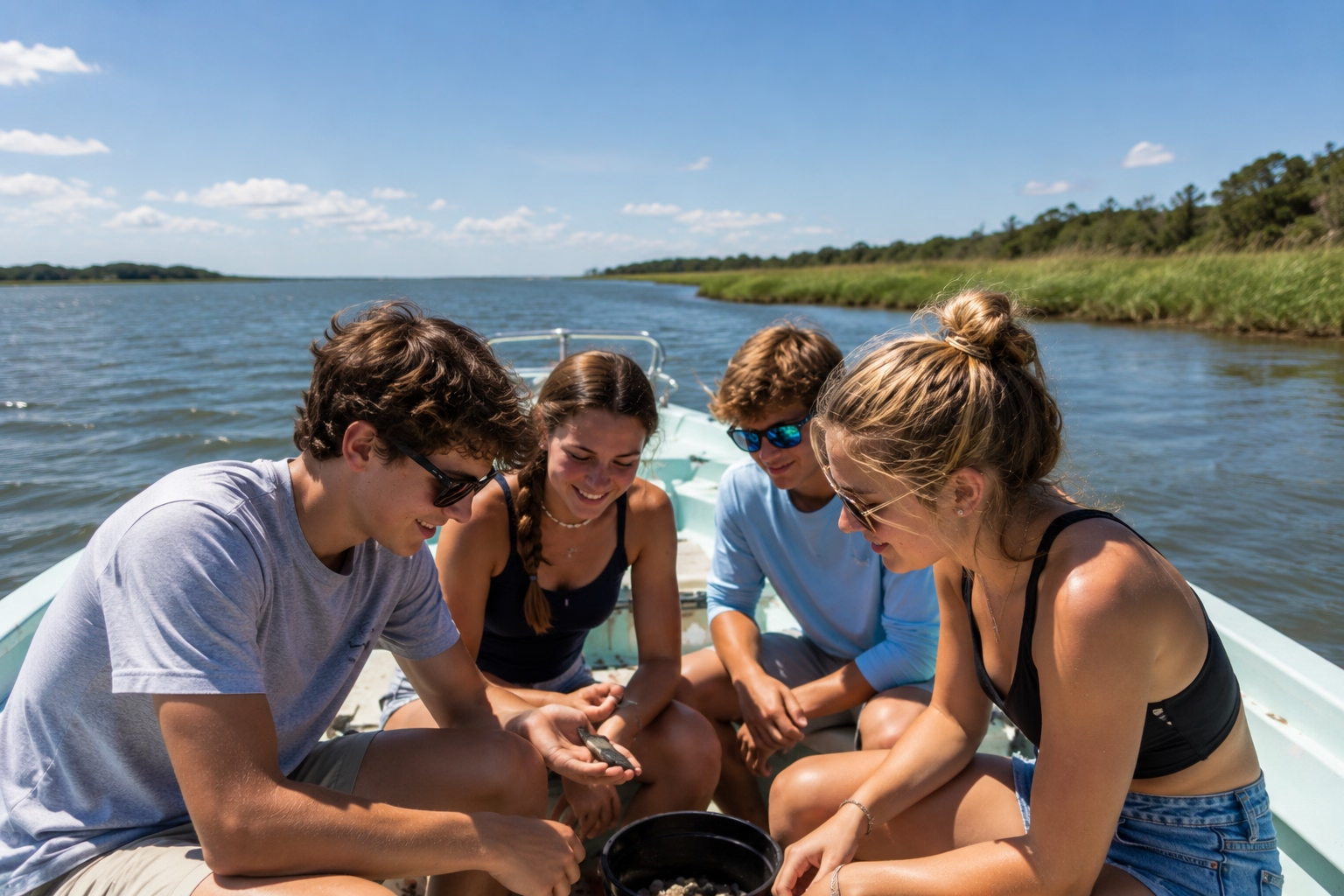
Coastal Georgia Birding: A Private Guide to Spring Migration
The Secret Atlantic Flyway: Birding Savannah’s Uninhabited Islands
Trading the Crowds for the Coast
As the salt marsh begins to green and the air warms, Coastal Georgia birding enters its most exciting season. Right now, the Atlantic Flyway is coming alive as thousands of migratory shorebirds and colorful songbirds make their way through our barrier islands. While many birders stick to the mainland trails, the true magic of the spring migration unfolds on the remote sandbars and shell rakes accessible only by boat.
Why Private Boat Tours are Best for Coastal Georgia Birding
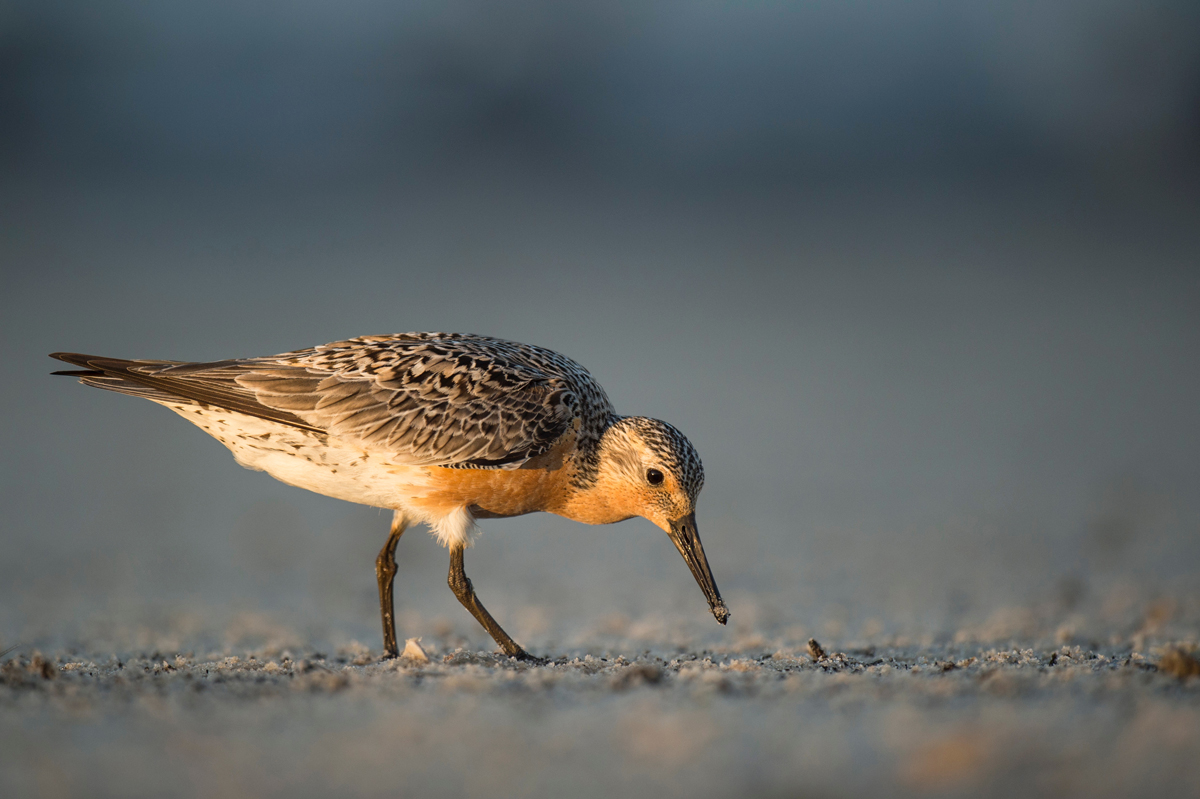
Out here, the difference between seeing a rare bird and scaring it away is silence. Because Low Country Drifters offers private excursions, we can cut the engine and drift quietly toward the mudflats. This is where you’ll find the “endurance athletes” of the bird world:
- The Whimbrel: Look for their long, down-curved bills as they hunt for fiddler crabs—their primary fuel source for the long journey north.
- The Red Knot: A federally threatened shorebird and a true “marathoner.” These birds stop on our remote barrier island beaches to refuel on their 9,000-mile journey. Seeing their rusty spring plumage against our white sands is a rare privilege.
- American Oystercatchers: Distinctive with their bright orange bills—always a favorite for photographers and easy to spot on the shell rakes.
- Painted Buntings: Often called “flying rainbows,” these stunning birds are just beginning to reappear in the maritime forests of Wassaw and Little Tybee.
The Drama of the Rookery Season
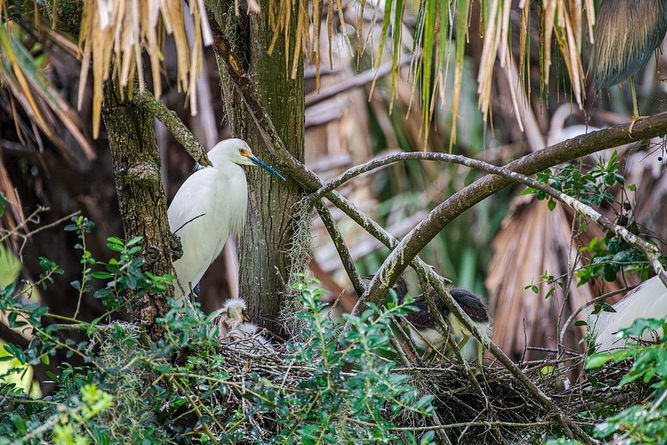
While the migratory shorebirds are the “marathon runners” of the coast, our local residents are currently putting on a spectacular show in the maritime forests and freshwater lagoons. From spring to summer, coastal Georgia birding is dominated by the noisy, busy, and beautiful nesting colonies known as rookeries.
- Wood Storks: These prehistoric-looking giants are a true conservation success story. Watching them balance on spindly nests in the treetops is a highlight of any spring boat trip.
- Great Blue Herons & Great Egrets: Now is the time to see their magnificent breeding plumage. The long, delicate “aigrette” feathers of the Great Egret were once so prized for ladies’ hats that the species was nearly hunted to extinction—now, they are a common and breathtaking sight.
- Roseate Spoonbills: Keep your eyes peeled for a flash of neon pink. These social nesters are often seen alongside herons and egrets, and their “bill-clapping” displays are a thrill for anyone with a camera.
The “Quiet Boat” Advantage: Nesting birds are particularly sensitive to noise and sudden movements. Because our excursions are private and small-scale, we can approach these sensitive areas with the stealth and respect they deserve, giving you a front-row seat to the nesting cycle without stressing the parents or chicks.
Experience the Coast with a CARE Certified Guide
Choosing the right guide is the most important decision you’ll make for your Coastal Georgia birding adventure. With guides who are Coastal Awareness & Responsible Ecotourism (CARE) Certified, Low Country Drifters is committed to the highest standards of wildlife conservation. We understand the delicate balance of our ecosystem—from the high-calorie needs of a migrating Red Knot to the sensitive nesting sites of Wood Storks.
When you drift with us, you aren’t just getting a front-row seat to nature’s greatest show; you are supporting a business dedicated to protecting the Georgia coast for generations to come.