Spotlight on the Red Knot
The Original Marathon Migrator
If there were a gold medal for endurance in the animal kingdom, the Red Knot (Calidris canutus rufa) would take the podium every single year. Making one of the longest migrations in the animal kingdom, this medium-sized shorebird is the ultimate world traveler, flying over 9,000 miles each way during its annual migration… a total yearly journey that can span nearly 20,000 miles.
For a few critical weeks each spring, the remote, windswept beaches of our barrier islands become a vital “refueling station” for these incredible athletes.
The 19,000-Mile Marathon
The rufa subspecies of the Red Knot travels from its wintering grounds at the southern tip of South America all the way to its breeding grounds in the Canadian Arctic. To survive this trek, they must stop at specific locations along the Atlantic Flyway to rest and put on enough weight to fuel the final leg of their flight.
The Georgia Connection
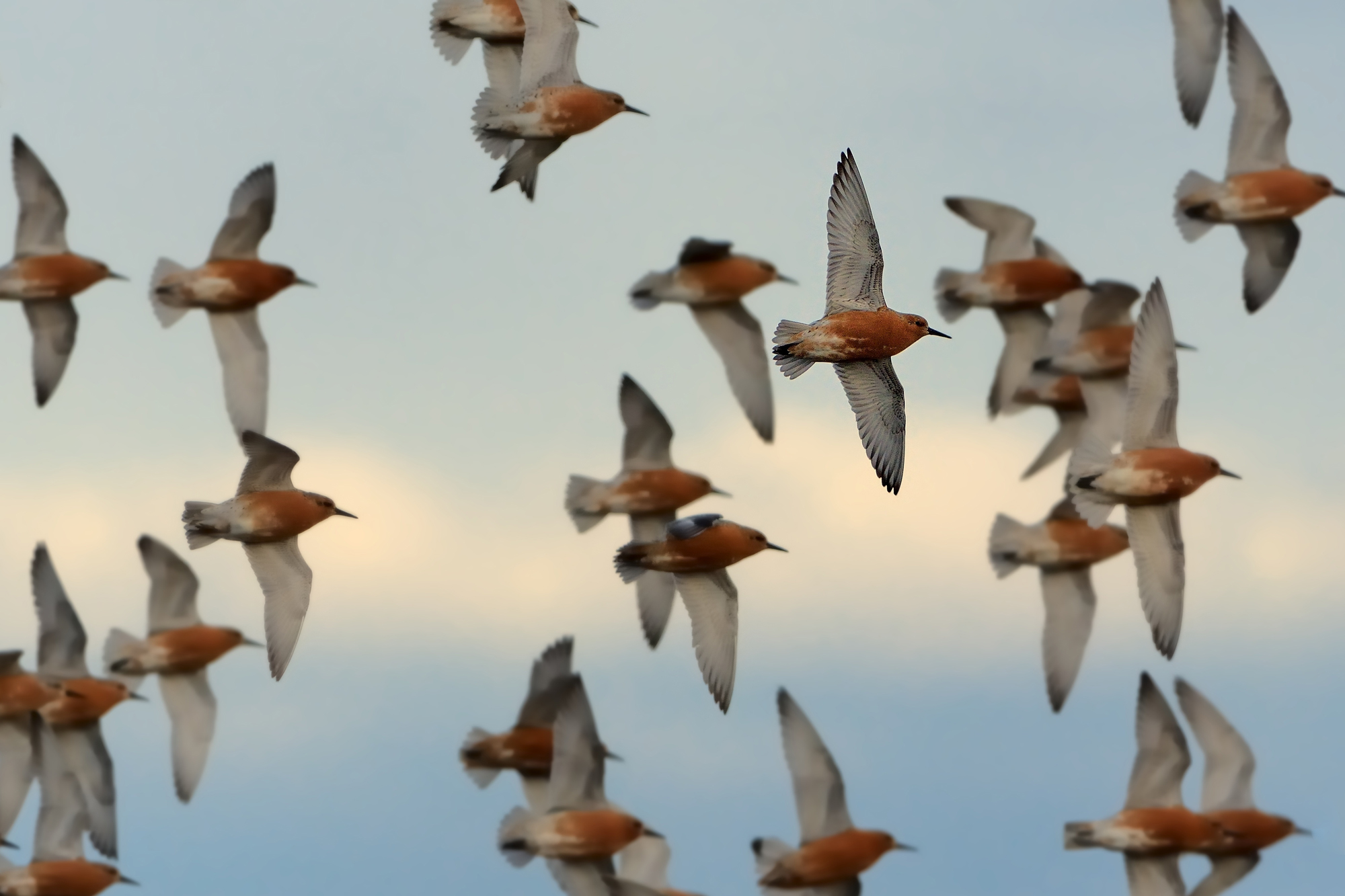
Our undeveloped beaches on Wassaw Island and Little Tybee Island offer the peace and high-calorie food sources they need to survive. Unlike other stops on the Atlantic Flyway, Red Knots in Georgia have a specialized diet, focusing on coquina clams and tiny blue mussel spat found in our healthy intertidal zones. Moreover, they rely heavily on horseshoe crab eggs from our beaches and mudflats for energy. They are easiest to spot on beaches during high tide when they congregate in large, roosting flocks.
A Stunning Transformation
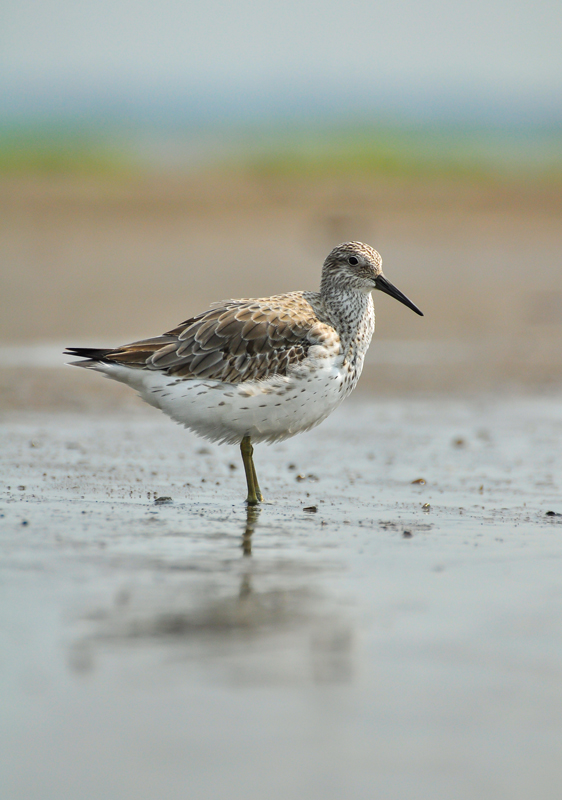
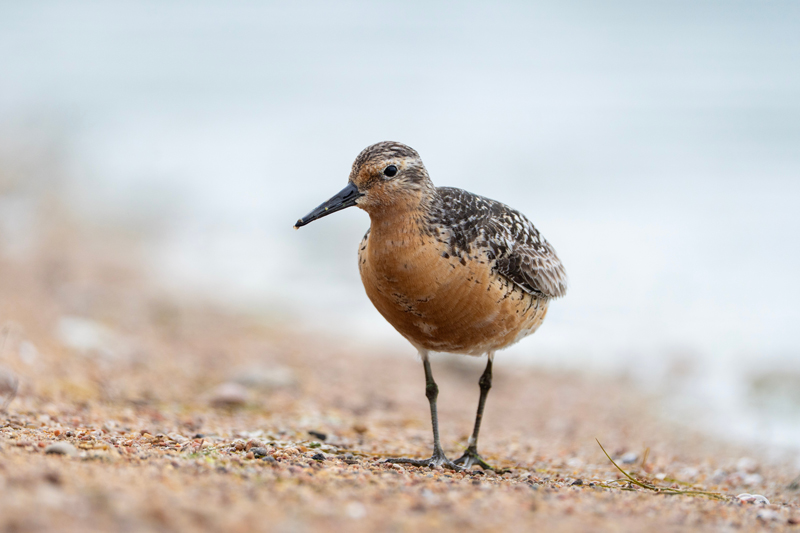
During the winter, Red Knots are a modest, nondescript gray. But as the spring migration begins, they undergo a breathtaking change. Their plumage shifts to a deep, rusty-cinnamon color across their breast and face.
Seeing a flock of these “rusty” birds foraging against the bright white sands of a Georgia sandbar is a highlight of any coastal Georgia birding trip.
Fast Facts
- Size: Part of the Sandpiper family, the Rufa Red Knot is a shorebird about the size of a Robin.
- The Organ Trick: To save on “cargo weight,” Red Knots actually shrink their internal organs (like their gizzards) before a long flight and regrow them upon landing to begin eating again.
- Stay Duration: They typically stay with us for 10 to 21 days between late-March and May; they must double their body weight during their spring pitstop before heading to the Arctic to breed.
- The Name for a Group: A collective group of knots is called a “fling.”
- The Chick: A baby Red Knot is a chick. They are precocial, meaning they can walk and feed themselves within hours of hatching in the frozen Arctic.
The Legend of “B95” (The Moonbird)
The most famous Red Knot in history was tagged “B95.” He was tracked for over 20 years. Scientists estimated that in his lifetime, he flew a distance equivalent to flying to the moon and halfway back.
Why Red Knots Are a Federally Threatened Species
In 2014, the Red Knot was listed as a threatened species under the Endangered Species Act. Their survival is a delicate balance. They rely heavily on the timing of our tides and the abundance of local food sources, like tiny coquina clams and horseshoe crab eggs.
Because they are often at the absolute limit of their physical endurance when they land on our shores, they are highly sensitive to disturbances.
Responsible Drifting: Our CARE Promise
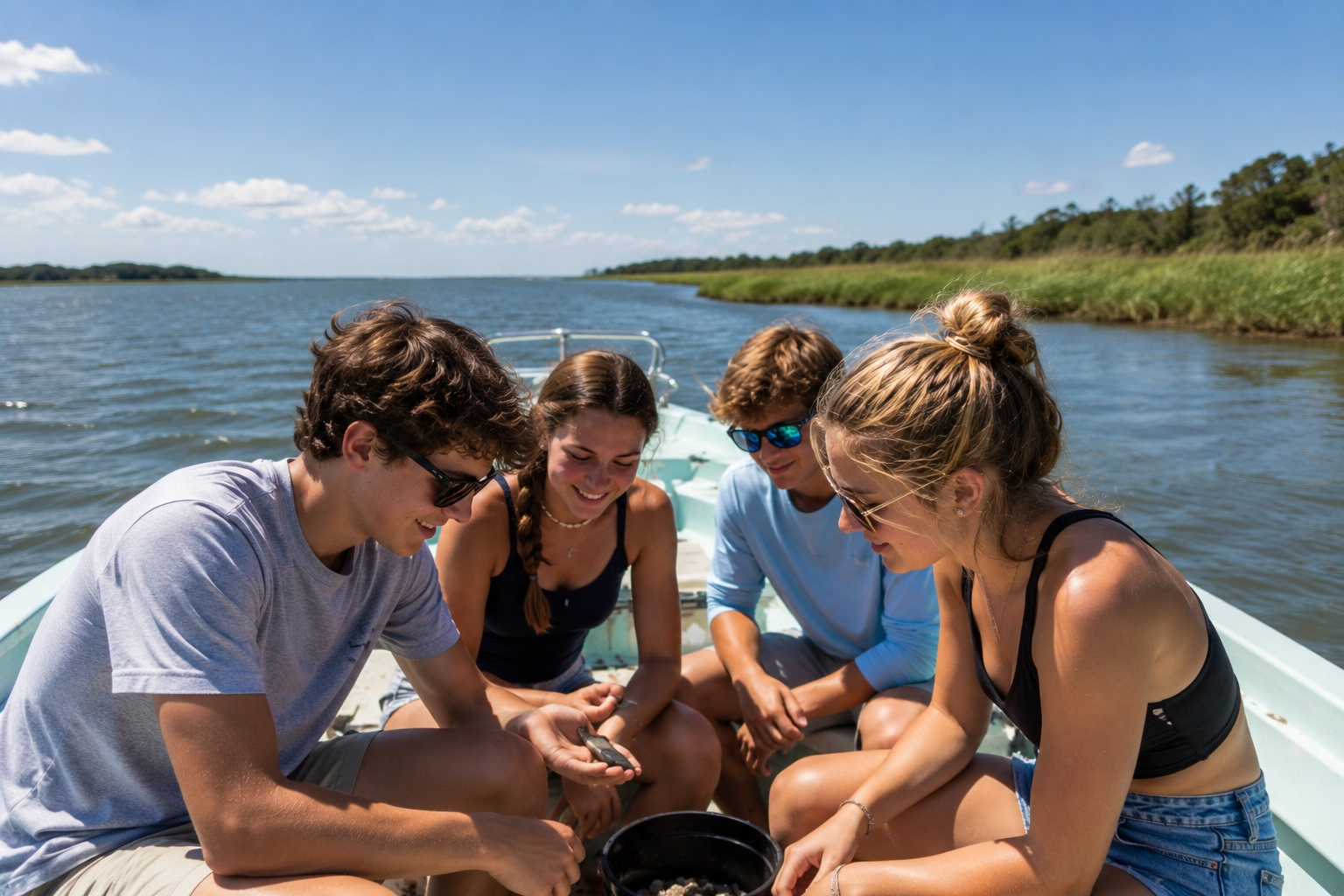
With guides who are CARE (Coastal Awareness & Responsible Ecotourism) Certified, Low Country Drifters is committed to protecting these marathon travelers. Because these birds are often at the absolute limit of their physical endurance when they land, we utilize “Responsible Drifting” techniques to ensure they aren’t disturbed:
- Observation from a Distance: Using binoculars to see every russet-colored feather without causing the birds to take flight.
- Silent Approaches from Afar: By cutting the engine and drifting, we allow the “fling” (a group of knots) to continue their frantic refueling process undisturbed.