Spotlight on the Wood Stork
Not your typical beauty, but definitely a showstopper
Meet the Wood Stork of coastal Georgia — the Low Country’s prehistoric marsh giant.
The Wood Stork (Mycteria americana) is one of the most striking and unusual wading birds you’ll spot in the Low Country. With its tall frame, bald head, and massive bill, it carries an almost prehistoric look—like something from another era. Once pushed to the brink of disappearance in the United States, this bird is now a celebrated success story of conservation in coastal Georgia.
Appearance & Behavior
Wood Storks stand about 3–4 feet tall with wingspans reaching up to 6 feet. Their plumage is bright white with contrasting black wing tips that flash dramatically in flight. Despite their imposing size, they soar gracefully, riding thermals for hours without flapping.
Unlike many other coastal birds, Wood Storks are mostly silent. Adults lack a true voice box, so they don’t call or sing. Instead, they communicate with bill clattering, hissing, or grunting, especially during nesting. Chicks, however, are much noisier and beg loudly in rookeries.
Feeding
Wood Storks are tactile hunters. They wade slowly through shallow water with their bills open, snapping them shut in as little as 25 milliseconds when they feel a fish or shrimp touch. This “snap reflex” makes them one of the fastest feeders in the bird world.
Nesting & Habitat
Wood Storks nest in large colonies, often in trees standing in swamps or wetlands. Both parents help build the nest and care for the chicks. Eggs are incubated for about a month, and chicks are raised in the safety of the colony until fledging.
Because they rely on precise water levels for feeding, healthy wetlands are critical for their survival. Their presence is considered a sign of a thriving marsh ecosystem.
Special to North America
The Wood Stork is the only native stork species in North America. While other storks live across Africa, Asia, and South America, the Wood Stork’s U.S. population is unique—mainly found in the southeastern coastal plain, including Florida, Georgia, and South Carolina. Their survival here is tightly tied to the health of our wetlands.
Conservation Success
In the 1970s and 1980s, the number of Wood Storks in the U.S. plummeted due to habitat loss and wetland drainage. They were listed as endangered in 1984. Thanks to protection efforts and habitat restoration, their populations rebounded enough to be downlisted to “threatened” in 2014. Today, they remain a conservation priority in Georgia.
Fun Facts
- Wood Storks can fly for hours without flapping, soaring on thermals like giant kites.
- Their bills can snap shut in as little as 25 milliseconds—faster than a blink.
- They act as weather forecasters—large gatherings often signal seasonal changes in rainfall and fish levels.
- In some cultures, storks symbolize good luck and new beginnings.
- Despite their bald heads, they’re elegant, silent gliders in the sky.
- They have “backward-bending knees”—but the joint we see isn’t a knee at all! It’s actually their ankle joint, while their true knee is hidden under feathers higher up the leg. This adaptation helps them wade in wetlands with balance and efficiency.
- A group of Wood Storks is called a “phalanx” or a “colony.”
- Baby Wood Storks are called chicks.
Spot Wood Storks With Us!
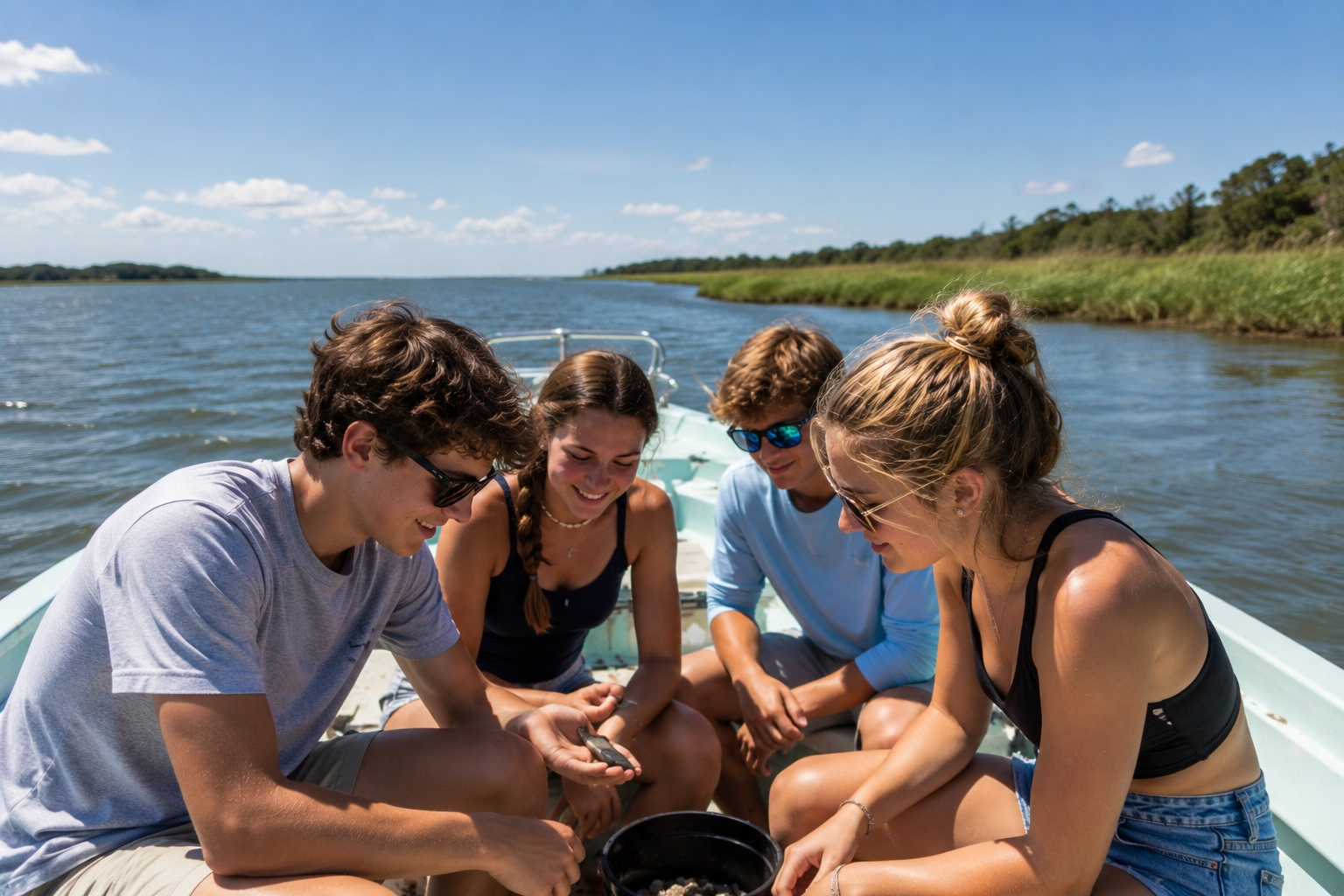
On a Low Country Drifters boat tour, you’ll often see Wood Storks soaring overhead or wading through tidal creeks in search of fish. Their prehistoric silhouettes are unforgettable against the backdrop of the marsh. Keep your camera ready—you might just catch one in mid-flight or feeding along the Spartina grass.