Spotlight on the Baby Dolphin
The First Chapter of a Wild Life for a Baby Dolphin
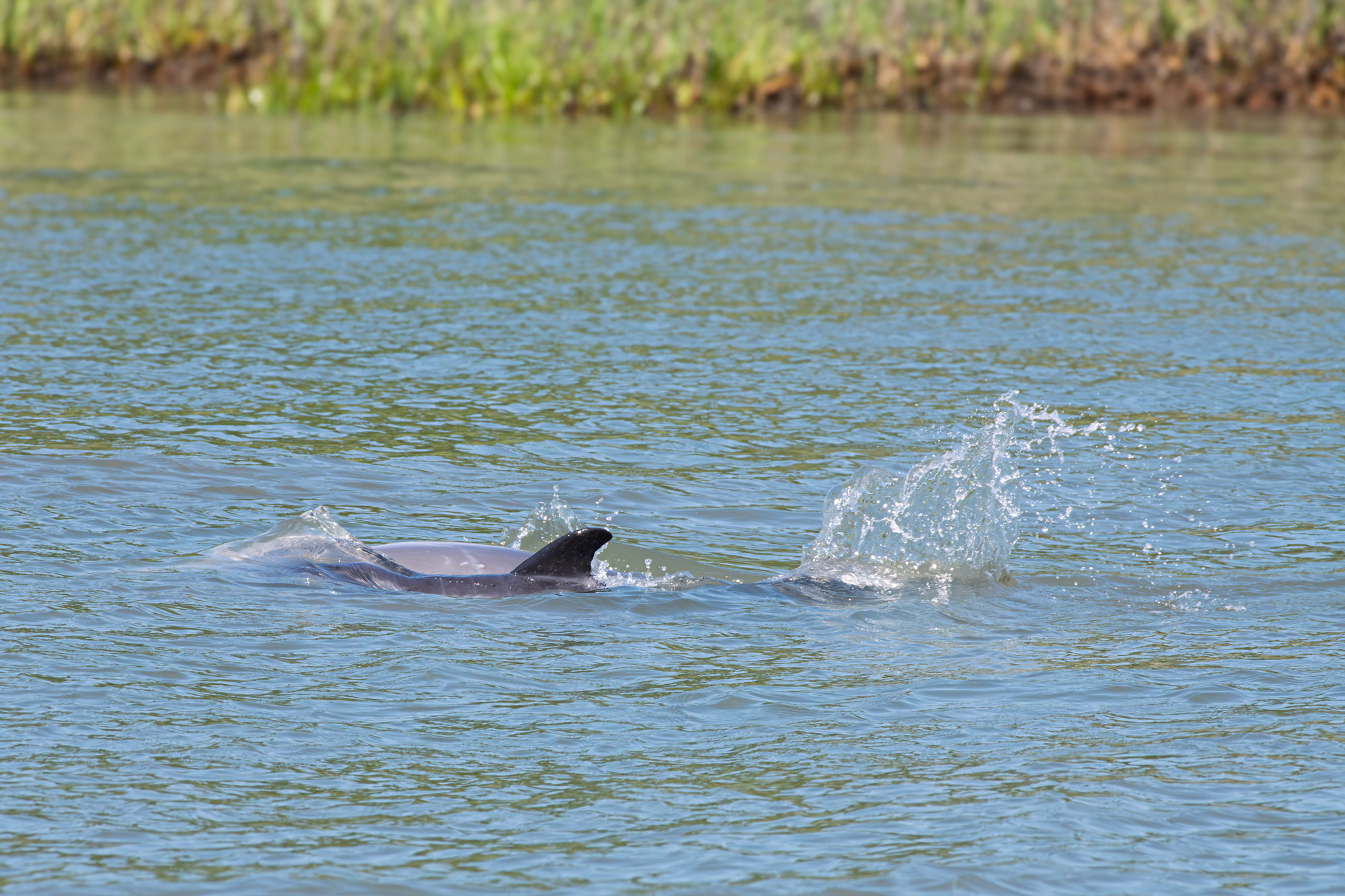
Some days on the water feel routine… until they don’t. A ripple breaks the surface. A larger dorsal fin rises, steady and familiar. Then, tucked tight beside it, a second shape appears—smaller, darker, just learning the rhythm.
That’s a calf. And around the marshes and tidal creeks of coastal Georgia, it’s one of the most special sights we get to share.
At Low Country Drifters, we spend a lot of time watching bottlenose dolphins. But when a newborn shows up, everything slows down just a bit.
How to Spot a Newborn Dolphin
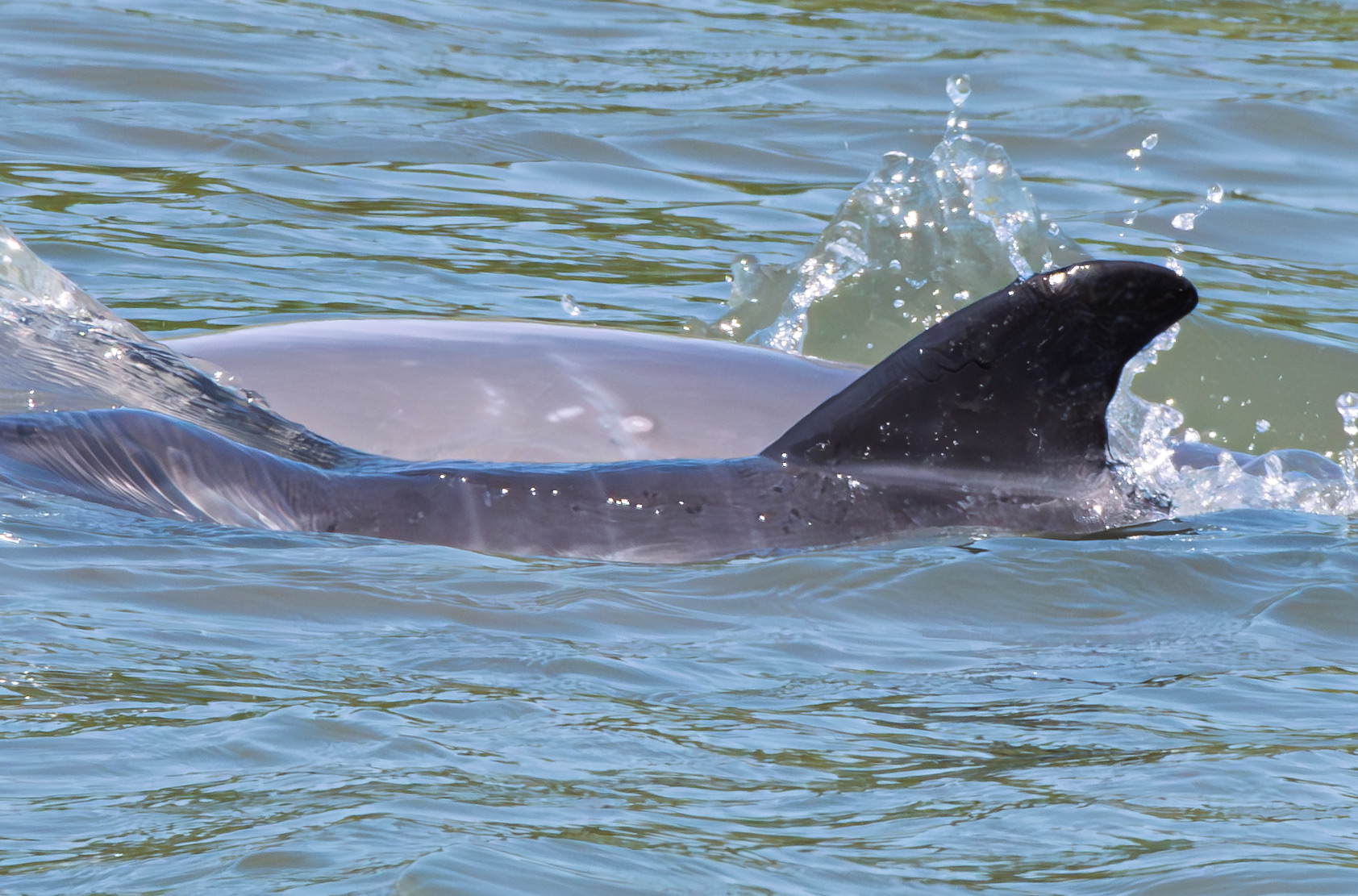
Newborn bottlenose dolphins (calves) don’t look like the sleek, light-gray adults most people picture.
Calves are darker, often a deep charcoal gray that can look almost black in the water. It’s one of the easiest ways to pick them out when they surface next to their mother.
If you look closely, you might also notice faint vertical lines running along their sides. These are called fetal folds, and they’re a temporary feature from the calf being curled up before birth. Think of them like soft crease marks that gradually fade as the calf grows and its skin smooths out.
Those two details—the darker color and the faint striping—are your best clues that you’re looking at a very young dolphin.
Staying Close to Mom
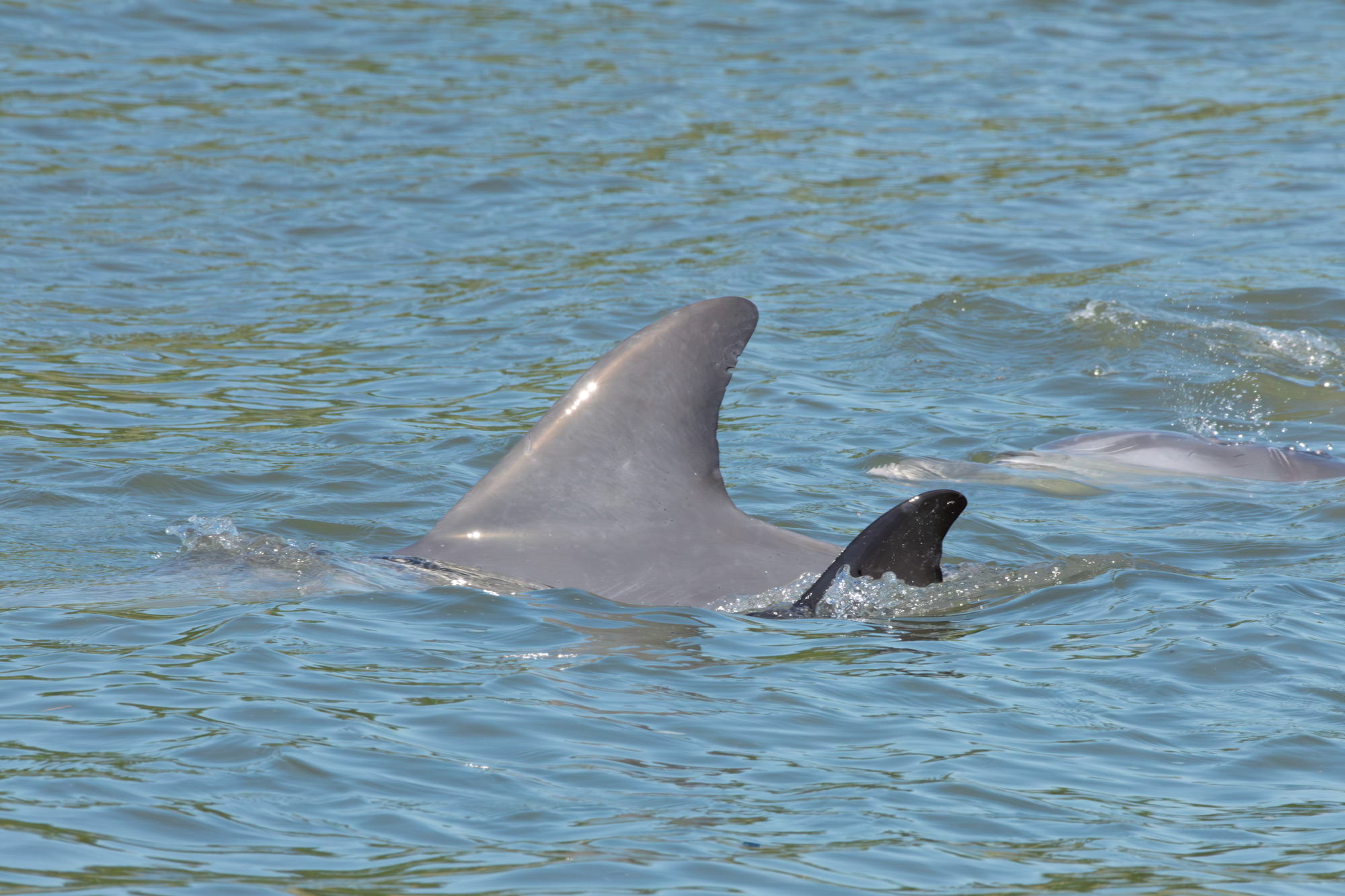
In the early days, a calf rarely leaves its mother’s side. You’ll often see them swimming just off her flank, matching her movements almost perfectly. This is known as riding the slipstream. The calf uses the pressure wave created by its mother to glide more efficiently, conserving energy while keeping pace. It’s part protection, part training wheels, and it keeps them tucked safely within reach. In the early weeks, calves rely on this slipstream almost constantly.
That dark coloration plays a role here, too. From a distance, the calf blends into the mother’s shape, making it harder to distinguish the smaller, more vulnerable animal from the larger one. It’s a simple, effective survival strategy, and one that’s been working for a long time.
Growing up in the Marsh
Life moves quickly for a young dolphin. Over the first several weeks and months, that deep charcoal color begins to lighten. The fetal folds fade. Movements become stronger and more coordinated.
But there’s more happening than just physical growth. Calves are constantly learning—how to surface efficiently, how to navigate shifting tides, how to interact with other dolphins. In this part of the world, that includes weaving through narrow creeks, feeding along oyster beds, and adapting to a landscape that changes by the hour.
They aren’t just growing. They’re being taught.
Quick Facts: Dolphin Calves
- Size at Birth: Typically around 3–4 feet long and weighing roughly 30–40 pounds
- Color: Dark gray to charcoal, gradually lightening over the first year
- Fetal Folds: Faint vertical lines visible shortly after birth; fade within weeks to months
- Food: Calves drink their mother’s milk (high in fat) for 1–2 years, and begin sampling fish within the first year while still nursing
- Time with Mom: Often stay closely bonded for 3–6 years while learning survival skills
- Swimming behavior: Frequently ride their mother’s slipstream to conserve energy. They are strong swimmers from birth, but refine coordination over time
- Best time to Spot Calves: Late spring through summer, when calving season peaks in the coastal waters around Savannah
A Short Window to See Something Rare
Here’s what makes these sightings so meaningful: they’re fleeting. The visual signs of a newborn don’t last long. Within a relatively short time, calves begin to resemble smaller versions of adults, and those early identifiers disappear.
That means when you do see a dark calf with faint folds, you’re witnessing a very specific moment in its life… one that doesn’t stick around.
Why These Sightings Matter
Every calf we see is a good sign. Dolphins choose these protected coastal waters as a place to give birth and raise their young. The creeks, estuaries, and open marsh provide food, shelter, and space to grow.
So when we spot a newborn, it’s more than just exciting; it’s a reminder that this ecosystem is doing what it’s supposed to do.
Ethical Dolphin Watching
Respecting the Wild: Conservation & Laws
At Low Country Drifters, we believe in “Entertainment through Education.” Dolphins are wild animals and deserve our respect. We strictly adhere to federal guidelines to ensure their safety and yours.
The Marine Mammal Protection Act (MMPA)
All dolphins in U.S. waters are protected under the Marine Mammal Protection Act of 1972. This law makes it illegal to “take” a marine mammal, which includes harassing, hunting, capturing, or feeding them.
- No Feeding: It is strictly illegal to feed or attempt to feed wild dolphins. Feeding them “human food” like hot dogs or bread makes them sick, but more importantly, it teaches them to associate boats with food. This leads to dangerous “begging” behavior that puts them at risk of boat strikes and entanglement in fishing gear.
- Maintain Distance: Per NOAA guidelines, we maintain a safe viewing distance of at least 50 yards (150 feet). If dolphins choose to approach our boat (which they often do!), we put our engines in neutral to protect them from propellers.
- Look, Don’t Touch: While they are curious and may swim close to the boat, we never attempt to touch or swim with wild dolphins. This protects their natural wild behaviors and keeps you safe, too!
Learn More & Get Involved
Catch a Glimpse of the Grey Ghost
See it While it’s Still New
You can read about dolphin calves. You can scroll past photos. But seeing one in the wild—small, dark, and staying tight to its mother—is something different entirely.
We don’t script these moments. Wildlife doesn’t run on a schedule.
What we do is spend our time where these stories are most likely to unfold… quiet creeks, open marsh, and the kind of places you don’t find on your own.
If the timing lines up, you won’t just see dolphins. You’ll witness the very beginning of one’s life out here.