Exploring Savannah’s Maritime Past: The Savannah Line & River Spoils
Buried treasures found on shark tooth excursions
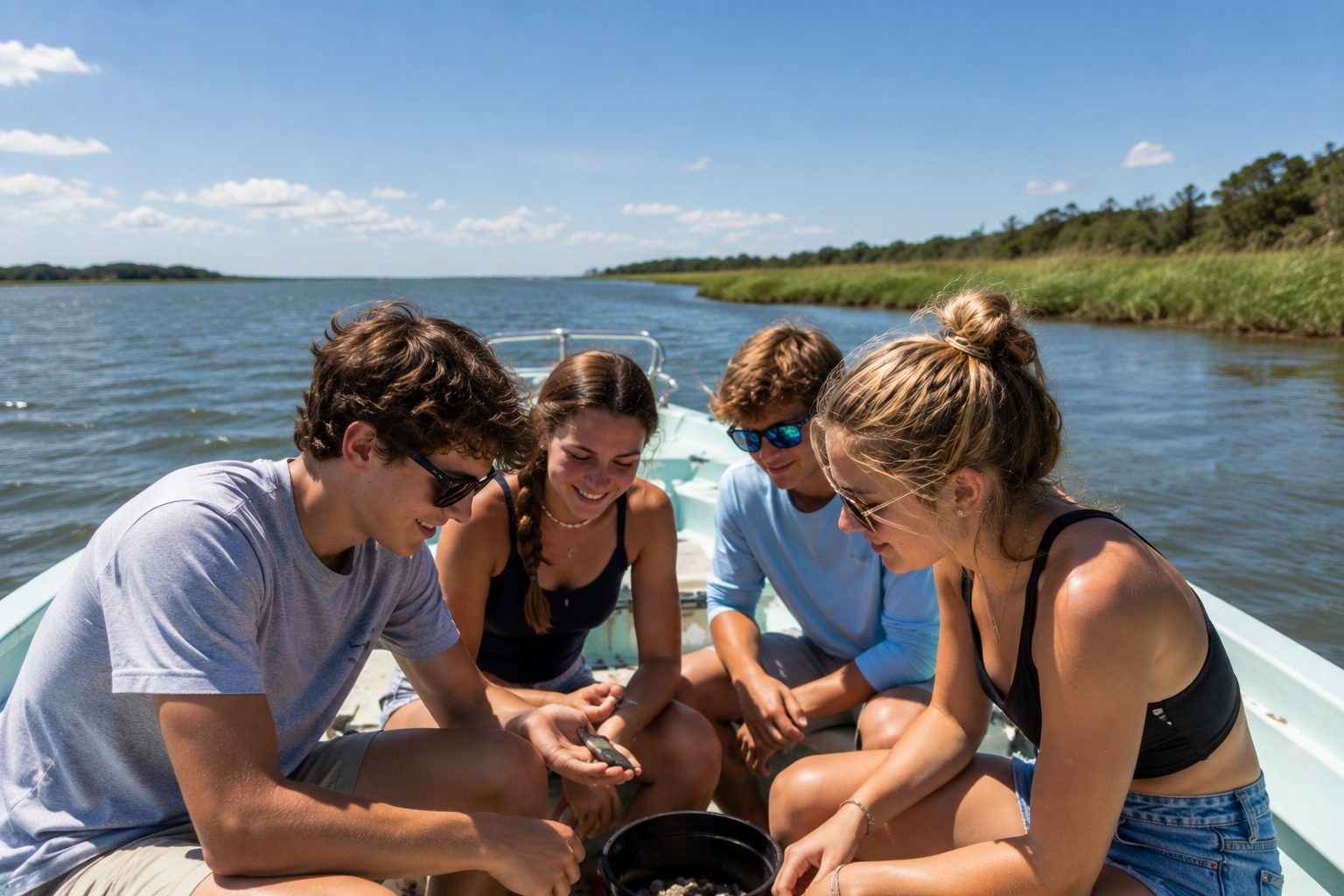
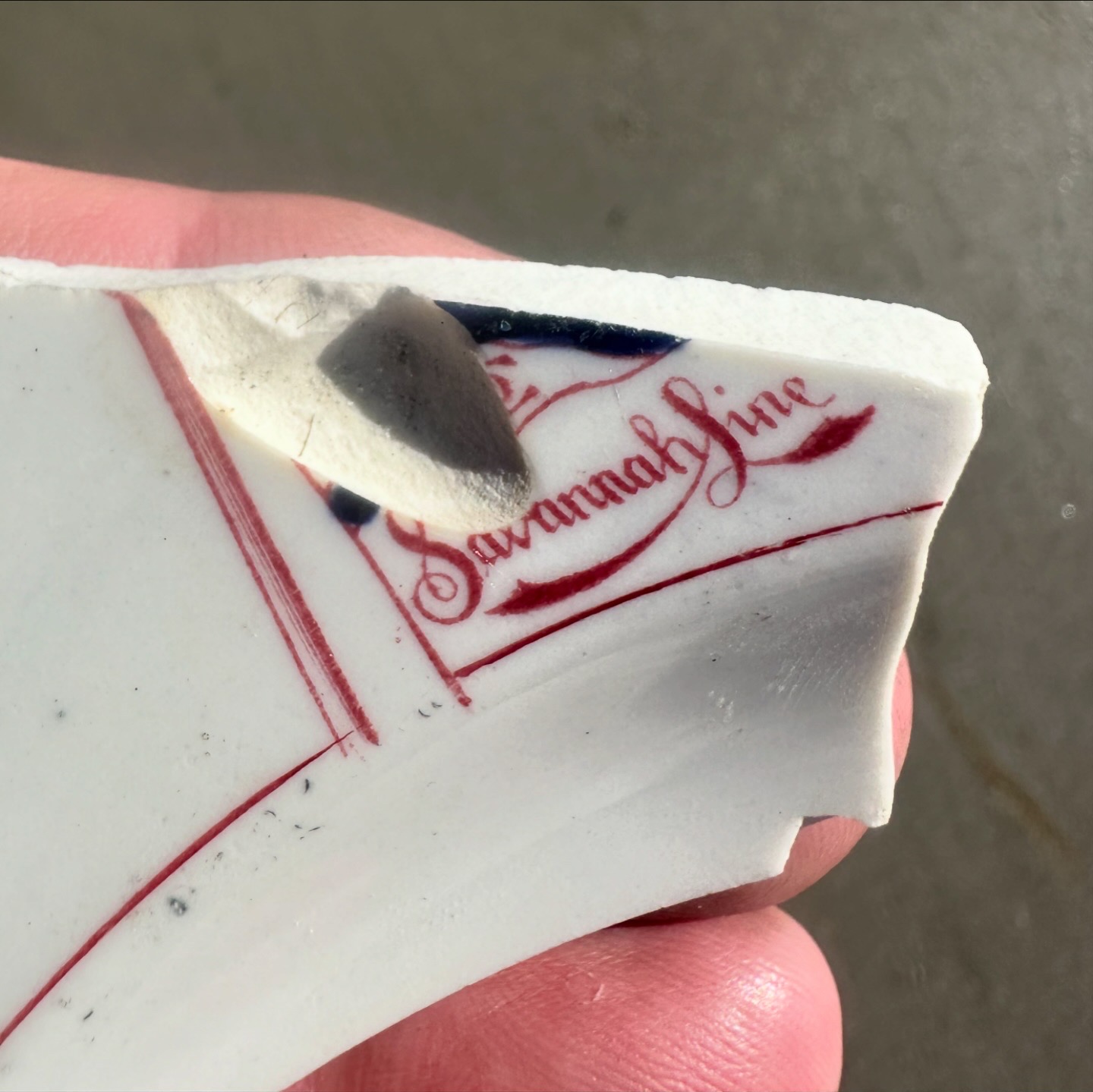
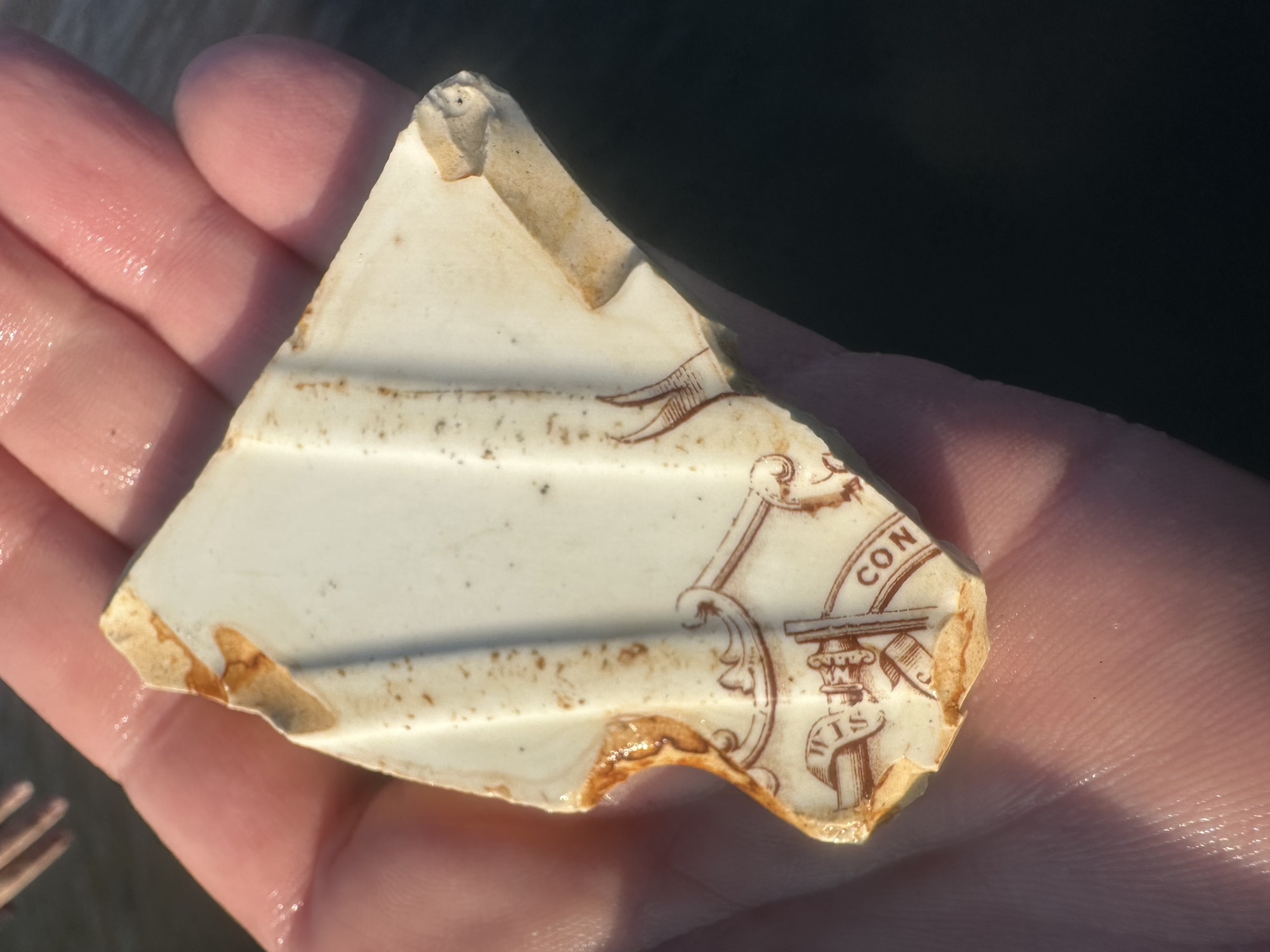
Over the past few years, while on shark tooth excursions, we’ve turned up something a little different from our usual fossils: three broken pieces of china from the Ocean Steamship Company of Savannah, better known as the Savannah Line.
Maritime History.
What Was the Savannah Line?
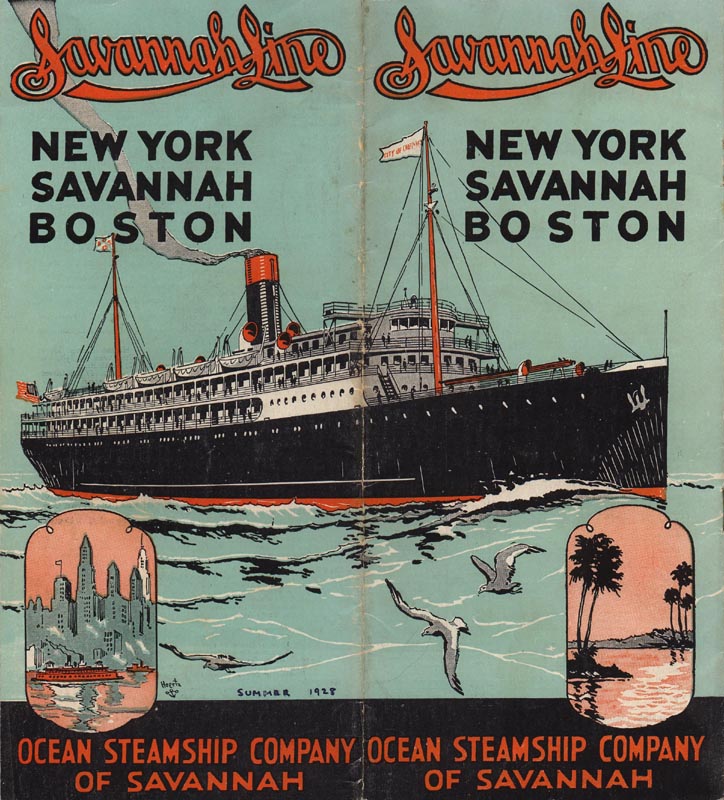
The Savannah Line was not a single ship, and it should not be confused with the City of Savannah or the S.S. Savannah. The Ocean Steamship Company of Savannah was founded on August 26, 1872, as a subsidiary of the Central of Georgia Railway. Its job was to move passengers and freight between Savannah and the major northern ports of New York, Boston, and Philadelphia, tying rail and sea transport together in a way that reshaped trade between the South and North.
At its peak, the line operated 18 passenger and freight steamers, considered among the finest on the East Coast, hauling cotton, naval stores, and other Southern goods north. The company grew steadily through acquisition, too: it picked up the Philadelphia and Southern Mail Steamship Company in 1881, then the Boston and Savannah Steamship Company in 1887, reorganizing it as the New England and Savannah Steamship Company. By the 1910s, the line had expanded into international shipping.
All of it was anchored to Savannah’s waterfront. In 1870, the Central of Georgia Railway acquired the 276-acre Vale Royal Plantation (now the area of the Georgia Ports Authority’s Ocean Terminal) along the Savannah River to build modern docks and warehouses for the Ocean Steamship Company — giving the railway a direct route to the sea.
The line ran continuously for seven decades, until the early 1940s, when the danger of submarine attack during World War II curtailed passenger service for good. By 1958, the Georgia Ports Authority had purchased the company’s waterfront property outright, and today that same ground operates as Ocean Terminal, a world-class breakbulk shipping facility.
Shards We Have Found
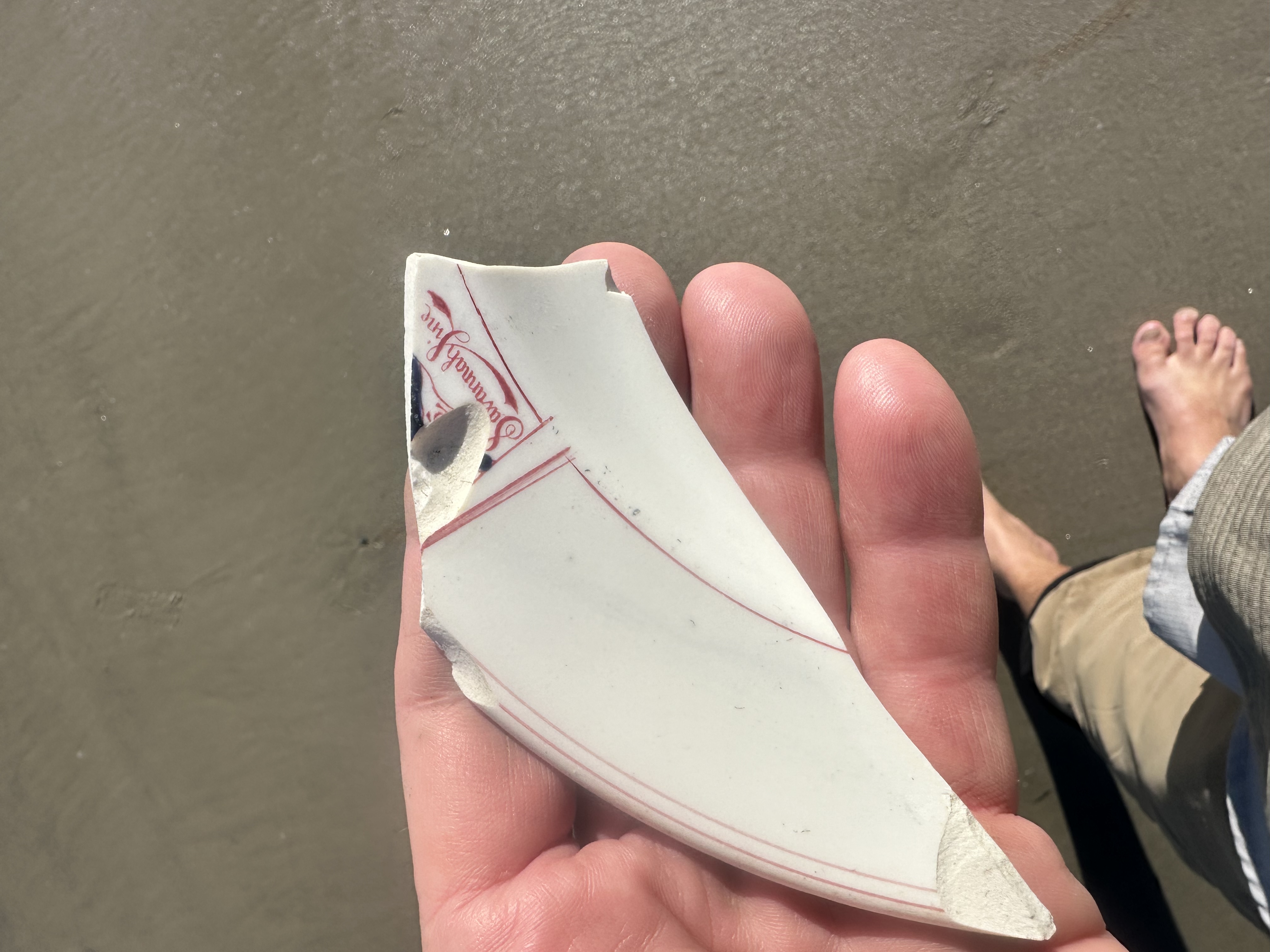
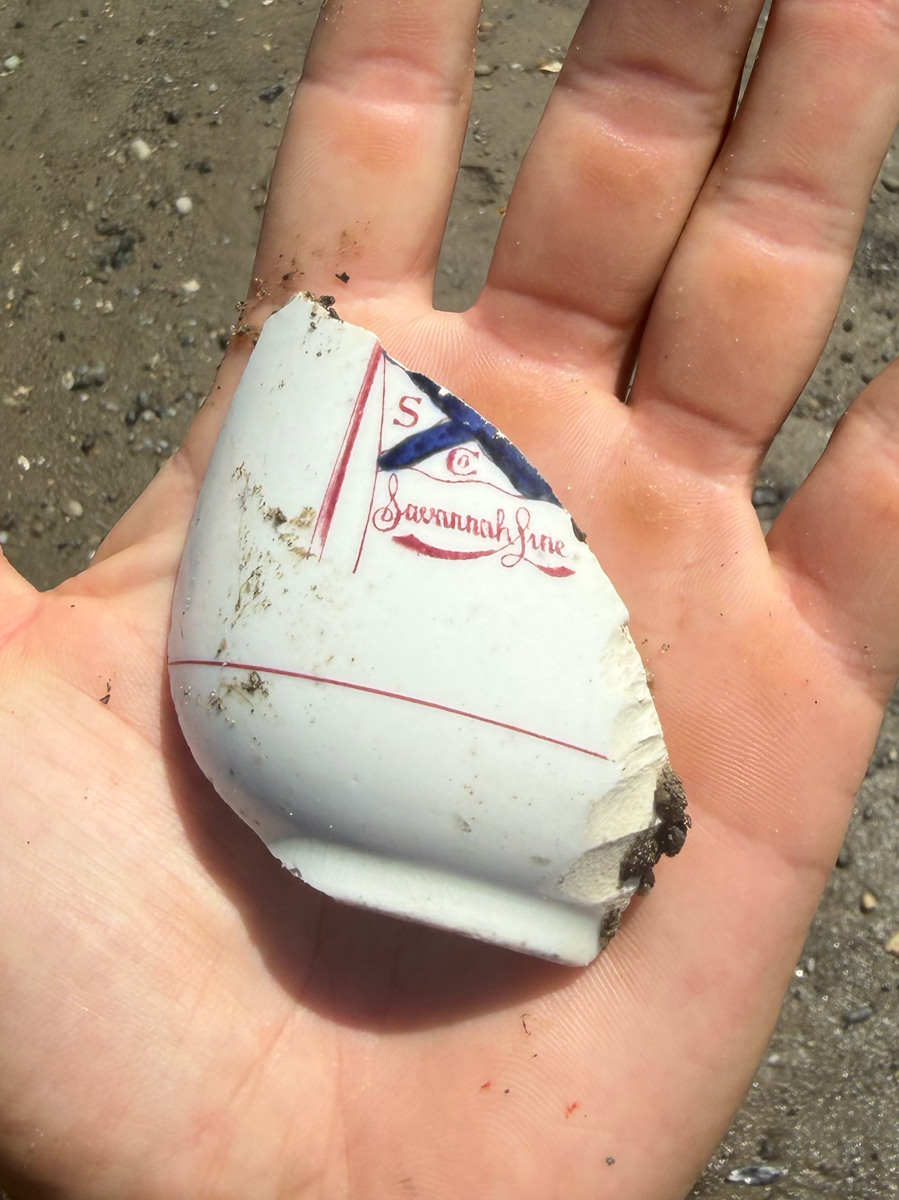
The two flag-pattern pieces carry the line’s actual house flag (the very banner its ships would have flown at sea). It’s a swallowtail design: white, with a saltire (blue diagonal cross) separating red letters that spell out O.S.S. Co. — Ocean Steamship Company of Savannah — with “Savannah Line” scripted beneath it in flowing red cursive.
- A flatter piece with a double red rim line appears to be from a serving platter or plate (found fall 2024).
- This piece shows the rolled lip of what was likely a mug (discovered summer 2026).
- The third piece is the real showstopper (found fall 2025). It’s a fragment of a well-and-tree platter — the kind of large carving platter with a raised center and moat, reserved for serving roasts at the captain’s table. It is dated 1889 by the WorthPoint Corporation, and bears part of the Georgia State Seal in ornate brown transferware scrollwork, including a piece of a lettered ribbon banner that would have said O.S.S. Co. It is considered quite rare. This pattern was produced by W.T. Copeland, a renowned Staffordshire, England pottery house, commissioned through New York agent James M. Shaw — the same firm that supplied dinnerware for the Titanic and the U.S. Navy around the same era. Surviving examples of this pattern are considered quite rare among collectors today. After much research, it was almost a year before we came across an example of the full design on the WorthPoint Corporation website.
Curious what a fully intact piece looks like? You don’t have to take our word for it — the Ships of the Sea Maritime Museum here in Savannah has intact pieces from this era on display, just a short walk from the riverfront where these ships once docked. Additionally, the Central of Georgia Railroad District has been called the finest surviving nineteenth-century railroad complex in the United States. Just a 10-minute walk from Ships of the Sea, the Georgia State Railroad Museum features antique shaft-driven machinery, locomotives and railroad stock, an operating turntable, and the oldest portable steam engine in the United States.