Unearthing History: Clay Pipes of the Savannah River Spoils
When guests head out on the Savannah River with us, their focus is usually set on hunting down massive Megalodon teeth or other impressive shark teeth. But as we scour the river’s dredge spoils, another incredible category of treasure may make an appearance: historic clay pipes.
Picking up a 200-year-old pipe fragment offers something fossils can’t—a direct, human connection to the daily lives of 18th- and 19th-century river captains, dockworkers, merchants, and sailors who navigated these exact waters.
Here is a look at the story behind these unique artifacts, the difference between long kaolin pipes and stub-stemmed pipes, and a few remarkable discoveries pulled from the spoils by our guests and crew.
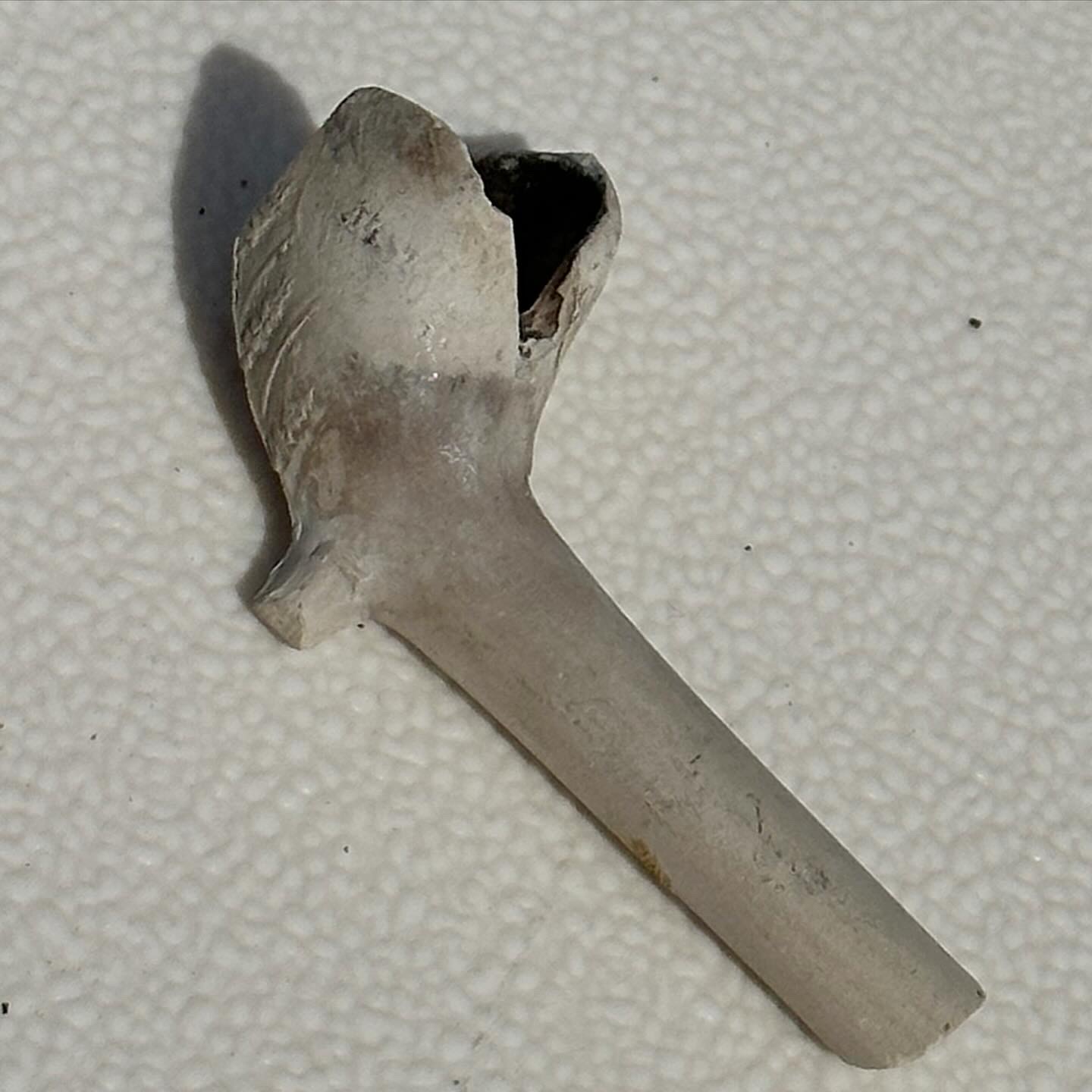
The Disposable Smoke of the 1700s and 1800s: White Kaolin Pipes
Long, slender clay pipes made from fine white kaolin clay were ubiquitous across coastal trading hubs from the 17th century through the late 19th century.
Because kaolin absorbs heat quickly and clogs with residue as it’s smoked, users would regularly break off the very tip of the stem to maintain a clean, cool draw. Once the stem was snapped down too close to the bowl, it became uncomfortable to hold and was simply tossed into the water.
Since they were produced cheaply and treated as single-use items, clay pipes are among the most frequent historic items found during mudlarking. However, because clay is so brittle, the vast majority of finds are tiny stem fragments or broken bowl pieces.
Finding an Intact Kaolin Pipe: A Rare Treasure

Spotting a full-length kaolin pipe with its entire stem intact is a rare thrill on the river. Right before a storm rolled in on a recent trip (summer 2026), a group spotted a near-perfect specimen resting on top of the spoils. Seeing a delicate, centuries-old stem survive intact amidst heavy river sediment is a true jackpot moment!
FUN FACT: Archaeologists date pipe stems by using a formula based on the diameter of the hole.
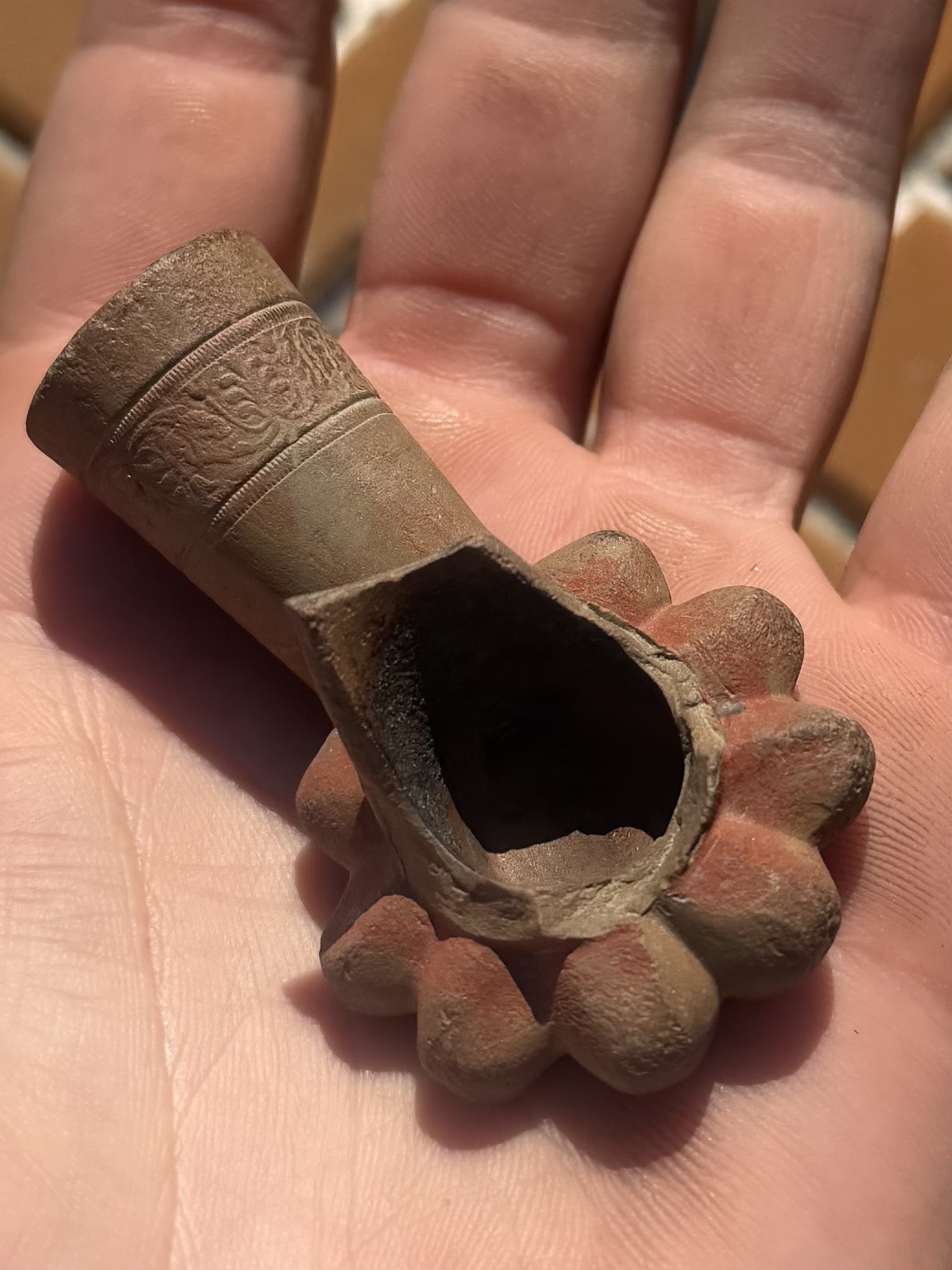
Long Stems vs. Stub-Stemmed Pipes
While classic European pipes featured one continuous piece of molded clay from bowl to tip, a different, highly functional style gained massive popularity in North America during the 1800s: stub-stemmed (or reed-stemmed) clay pipes.
How Reed-Stemmed Pipes Worked:
- The Structure: Rather than a long clay stem, these featured a compact, heavy-duty clay bowl with a hollowed-out socket at the base.
- The Stem: The owner would push a separate, removable stem, typically a hollow reed, wooden twig, or bone, directly into the socket.
- Built for Leisure and Labor: They were tailored for working hands and active duty. If a wooden or reed stem snapped while working the docks or during a soldier’s leisure hours in camp, you didn’t need to replace the entire pipe—you just trimmed a new reed and kept going.
Stub-stemmed bowls were often crafted with bold decorative flair, featuring floral scallops, fluting, geometric ridges, and cross-hatched details that make them stand out instantly when uncovered today.
A Staple for Soldiers on the River
Beyond dockworkers and sailors, clay pipes—especially sturdy stub-stemmed styles—were a fixture of camp life for troops stationed along the Savannah River during the Revolutionary War and the Civil War. During long hours of downtime between duties or while on watch along the coast, smoking a pipe was one of the few everyday comforts available to soldiers. Dropped or discarded around encampments and river landings, these pipes remain a quiet lingering trace of garrison life during pivotal moments in American history.
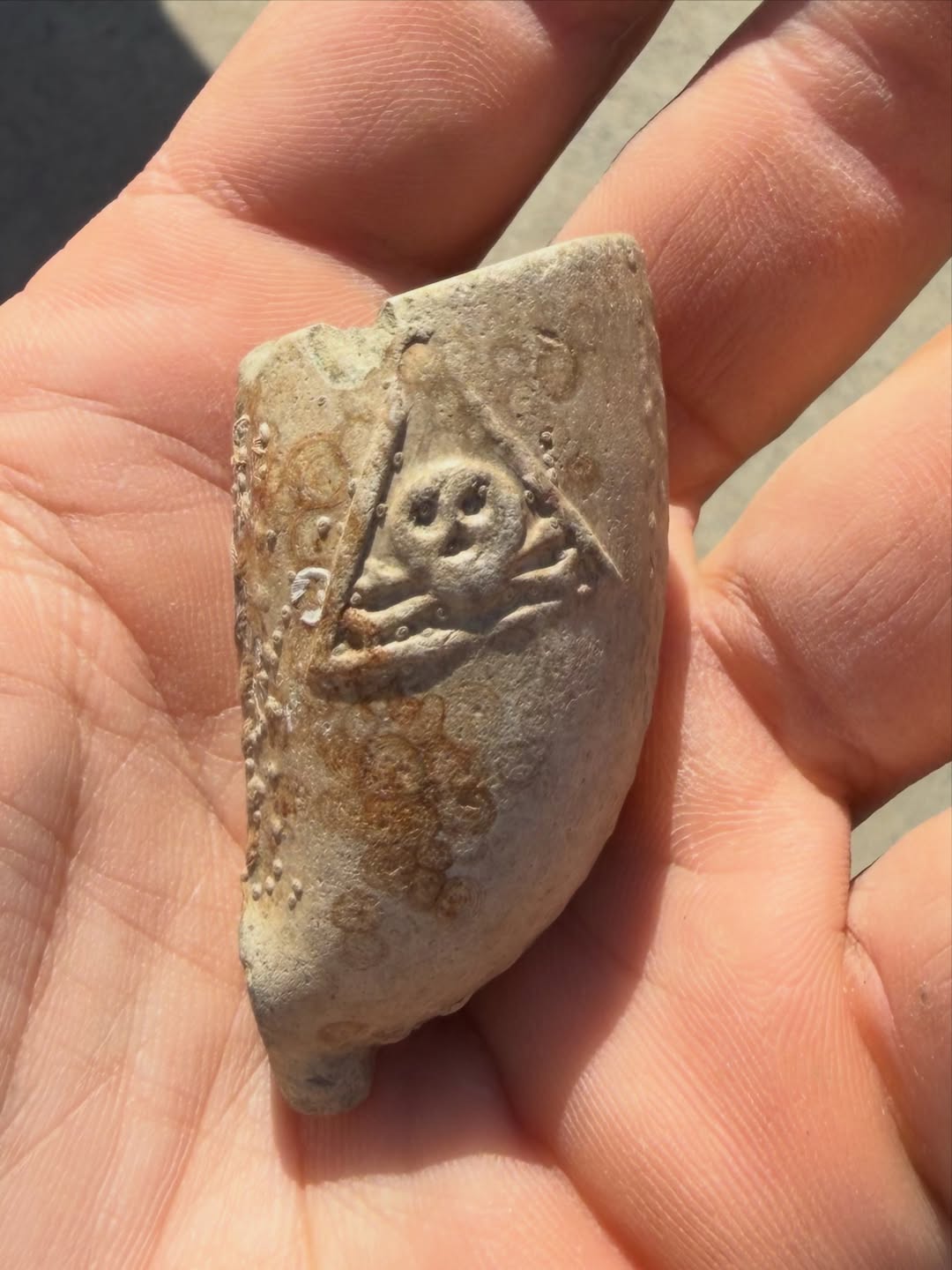
Deep Symbolism: The “Memento Mori” Pipe
While every pipe fragment offers a peek into past daily life, some carry striking artistic detail. During a recent Low Country Drifters excursion (summer 2026), our crew picked up a remarkable late-18th/19th-century bowl decorated with a raised emblem: a skull and crossbones set inside an upward triangle.
This design is a classic example of Memento Mori—a Latin phrase translating to “Remember you must die.” Far from being dark or morbid, Memento Mori motifs were widely used in the 1700s and 1800s as a grounded, everyday reminder that time is limited, encouraging people to live purposefully, seek wisdom, and make every day count.
Holding an item crafted with such personal, timeless symbolism right in the palm of your hand makes scouting the river spoils an unforgettable experience.
Hunt the River Spoils with us
Ready to uncover your own piece of low country history?
From multi-million-year-old prehistoric shark teeth to century-old steamship china and detailed clay pipes, the river spoils are packed with surprises waiting to be found.
Every single trip we run is 100% guided by experienced local captains and guides who help you identify your finds and understand the rich history behind them.