Spotlight on the Bottlenose Dolphin
Savannah’s Wild Side: Bottlenose Dolphins of the Low Country
Playful, brilliant, and masters of the marsh.
While we specialize in custom adventures and fossil hunting, the local Atlantic Bottlenose Dolphins are the true stars of the Savannah waterways. Because our tours are small and private, we have the unique ability to pause, cut the engine, and witness these incredible animals in their natural habitat without the large, overcrowded tour boat on a timeline.
Meet Our Resident Pods
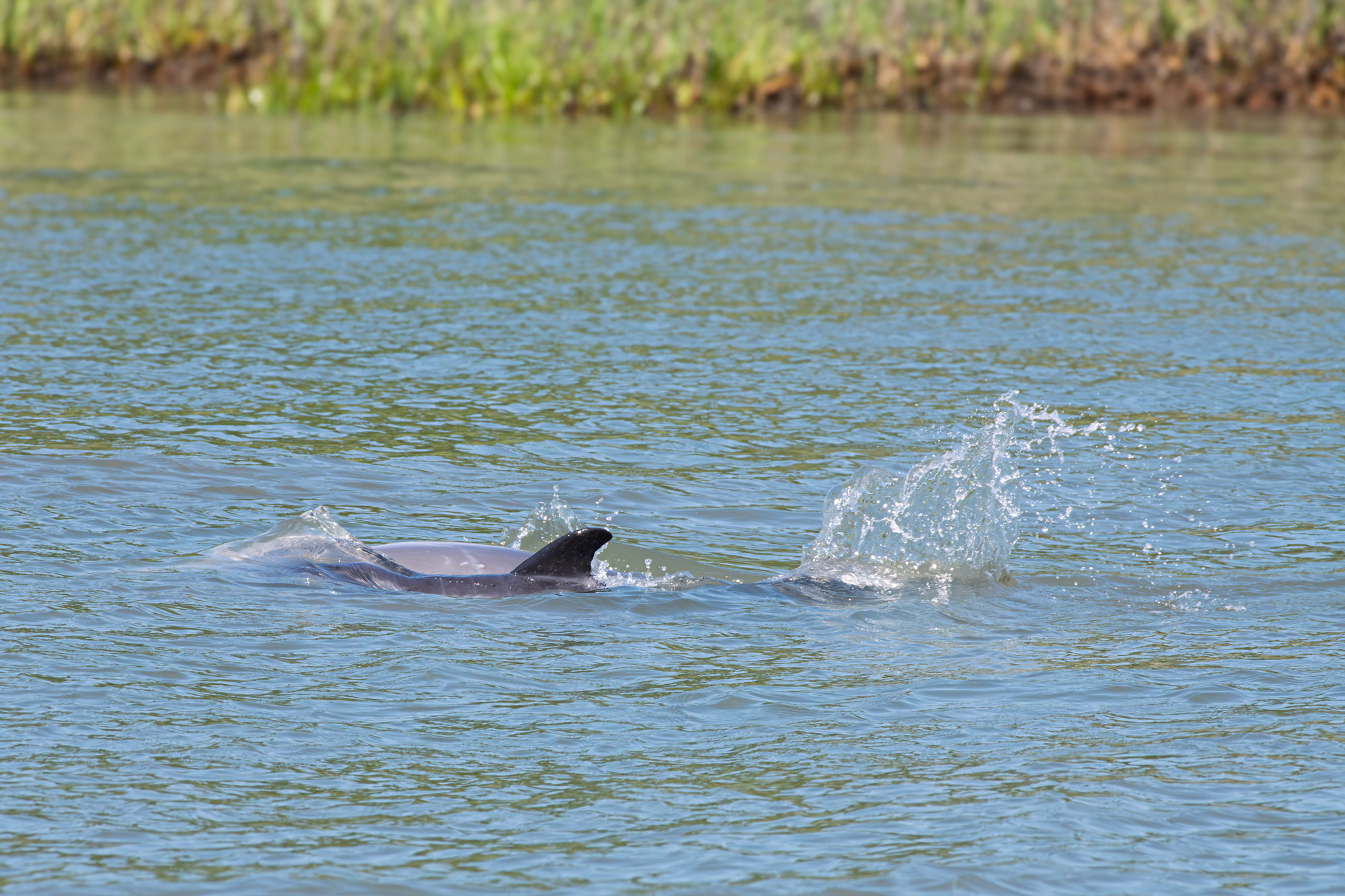
Savannah is home to both seasonal travelers and year-round resident dolphins. Our approximately 400 “resident” dolphins spend their entire lives in our local estuaries, tidal creeks, and salt marshes.
Quick Facts
- Scientific Name: Tursiops truncatus
- Group Name: A pod (usually 2–15 dolphins)
- Baby Name: A calf
- Lifespan: 40–50 years in the wild
- Top Speed: Up to 20 mph—though they usually cruise at 5 mph
Feeding, Habitat & Lifestyle
- Habitat: While some dolphins prefer the deep ocean, our residents love the shallow salt marshes and tidal creeks surrounding Savannah. These “estuaries” are like a nursery, full of the fish they love.
- Feeding: An adult dolphin eats about 15–30 pounds of fish and squid a day. In the Lowcountry, they are famous for “strand feeding,” where they work together to push a school of fish onto a mudbank and then slide out of the water to grab a snack.
- Nesting (Social Life): While they don’t “nest” like birds, mothers stay very close to their calves for 3 to 6 years, teaching them to hunt and navigate the complex waterways of Georgia.
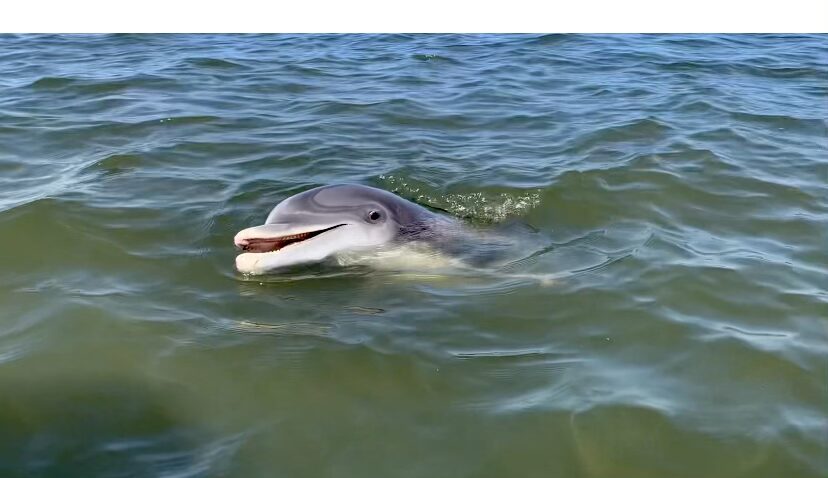
- The “Smile” – Known for their permanent “smile,” these dolphins can grow up to 13 feet long and weigh over 600 pounds.
- Social Sophistication – Dolphins are highly social and communicate through a complex system of clicks, whistles, and body language. Each dolphin even has a “signature whistle” that acts like a name!
Respecting the Wild: Conservation & Laws
At Low Country Drifters, we believe in “Entertainment through Education.” Dolphins are wild animals and deserve our respect. We strictly adhere to federal guidelines to ensure their safety and yours.
The Marine Mammal Protection Act (MMPA)
All dolphins in U.S. waters are protected under the Marine Mammal Protection Act of 1972. This law makes it illegal to “take” a marine mammal, which includes harassing, hunting, capturing, or feeding them.
- No Feeding – It is strictly illegal to feed or attempt to feed wild dolphins. Feeding them “human food” like hot dogs or bread makes them sick, but more importantly, it teaches them to associate boats with food. This leads to dangerous “begging” behavior that puts them at risk of boat strikes and entanglement in fishing gear.
- Maintain Distance – Per NOAA guidelines, we maintain a safe viewing distance of at least 50 yards (150 feet). If dolphins choose to approach our boat (which they often do!), we put our engines in neutral to protect them from propellers.
- Look, Don’t Touch – While they are curious and may swim close to the boat, we never attempt to touch or swim with wild dolphins. This protects their natural wild behaviors and keeps you safe, too!
Catch a Glimpse of the Grey Ghost!
Don’t just watch from the shore—get a front-row seat to the magic of the marsh.
There is nothing quite like the sound of a dolphin’s “blow” breaking the silence of a quiet tidal creek. At Low Country Drifters, we don’t just “drive by”; we stop, observe, and share the stories of these incredible marine neighbors. Whether they are bow-riding or teaching their young to hunt, every encounter is a new adventure.
FAQ: Everything You Need to Know
Key Partners
Key partners in area marine mammal stranding networks and conservation.