Diamondback Terrapins: Georgia’s Salt Marsh Guardians
Meet the diamondback terrapin
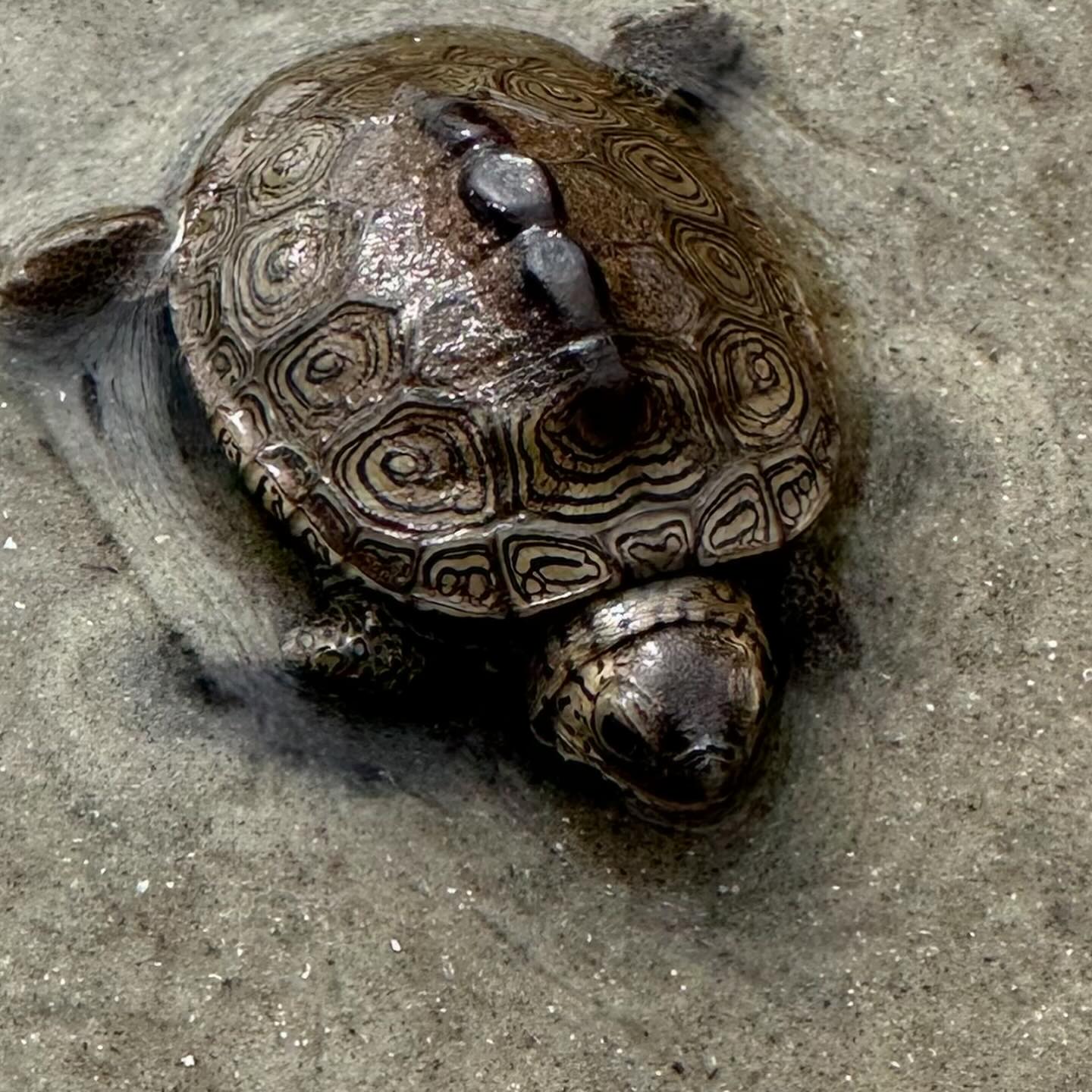
The diamondback terrapin (Malaclemys terrapin) is the only turtle species in the United States that lives exclusively in brackish water, and the only reptile adapted to life in Georgia’s coastal salt marshes. About the size of a dinner plate, it’s easy to overlook from the deck of a boat — but this small turtle plays a genuinely outsized role in keeping Georgia’s marshes healthy.
Diamondback Terrapins, at a Glance
- The only turtle in the U.S. that lives exclusively in brackish tidal waters — marshes, creeks, and estuaries
- The only reptile adapted to live in Georgia’s salt marshes
- A keystone species: they help control periwinkle snail populations, which can otherwise strip marsh grass bare
- Named “terrapin,” from “torope,” a word in an Algonquian language
- Listed as a Species of Concern in Georgia since 2003, and Vulnerable on the global IUCN Red List
- Best spotted gliding through quiet tidal creeks and marsh edges
“Terrapin” is derived from “torope,” a word in an Algonquian language. The diamondback terrapin gets its name from the angular designs on its scutes, which form the shell — and each shell pattern is as unique as a fingerprint or a snowflake.
Why Terrapins Matter to the Marsh
Terrapins aren’t just a cute find on a boat tour; biologists consider them a keystone species for the entire salt marsh ecosystem. Their main food source is the marsh periwinkle snail, and periwinkles graze on Spartina alterniflora, the cordgrass that physically holds Georgia’s marshes together. When terrapins (and other predators) keep periwinkle numbers in check, the marsh grass thrives. When they don’t, the snails can strip it bare.
That’s not a hypothetical. A severe drought in the early 2000s weakened marsh grass across the Southeast, and periwinkle populations exploded in response, grazing down an estimated 250,000 acres of marsh from Louisiana to Georgia between 1999 and 2003. It’s one of the clearest examples on record of how much a single small grazer — and, by extension, its predators — can reshape an entire coastline.
And the marsh itself does a lot of work: it’s nursery habitat for the shrimp, crab, and fish that show up on menus (and in our shark tooth spoils), it buffers the coast from storm surge, and it filters the water flowing out to the ocean. Protecting terrapins is, in a roundabout way, protecting all of that.
A Rough History, and an Unlikely Rescue
Diamondback terrapins almost didn’t make it to the present day, and the reason is a little absurd: turtle soup. In the 19th and early 20th centuries, terrapin soup — simmered with cream, butter, and a generous pour of sherry — was considered a delicacy, showing up on menus from the White House to New York’s finest restaurants. Demand was so intense that terrapins were harvested by the thousands, and populations up and down the Atlantic coast collapsed.
Then, in an unlikely twist, Prohibition saved them. When the 18th Amendment banned the sale of alcohol in 1920, sherry disappeared from grocery shelves along with it — and without sherry, terrapin soup lost its signature ingredient. Demand for terrapin meat cratered almost overnight, and wild populations were finally given room to recover. It’s not every day a turtle owes its survival to a temperance movement.
Populations partially rebounded over the following decades, but by 2003, Georgia added the diamondback terrapin to its official “Species of Concern” list and banned commercial harvesting outright. The threats today look different than they did a century ago: habitat loss, pollution, and marsh destruction top the list. Nesting females are frequently struck by cars while crossing causeways to lay their eggs, and males regularly drown in crab traps that lack a simple bycatch reduction device — a small excluder that keeps terrapins out while barely affecting the crab catch. Only a handful of states currently require them.
See Them for Yourself
While they can be elusive, you can spot them if you pay attention.
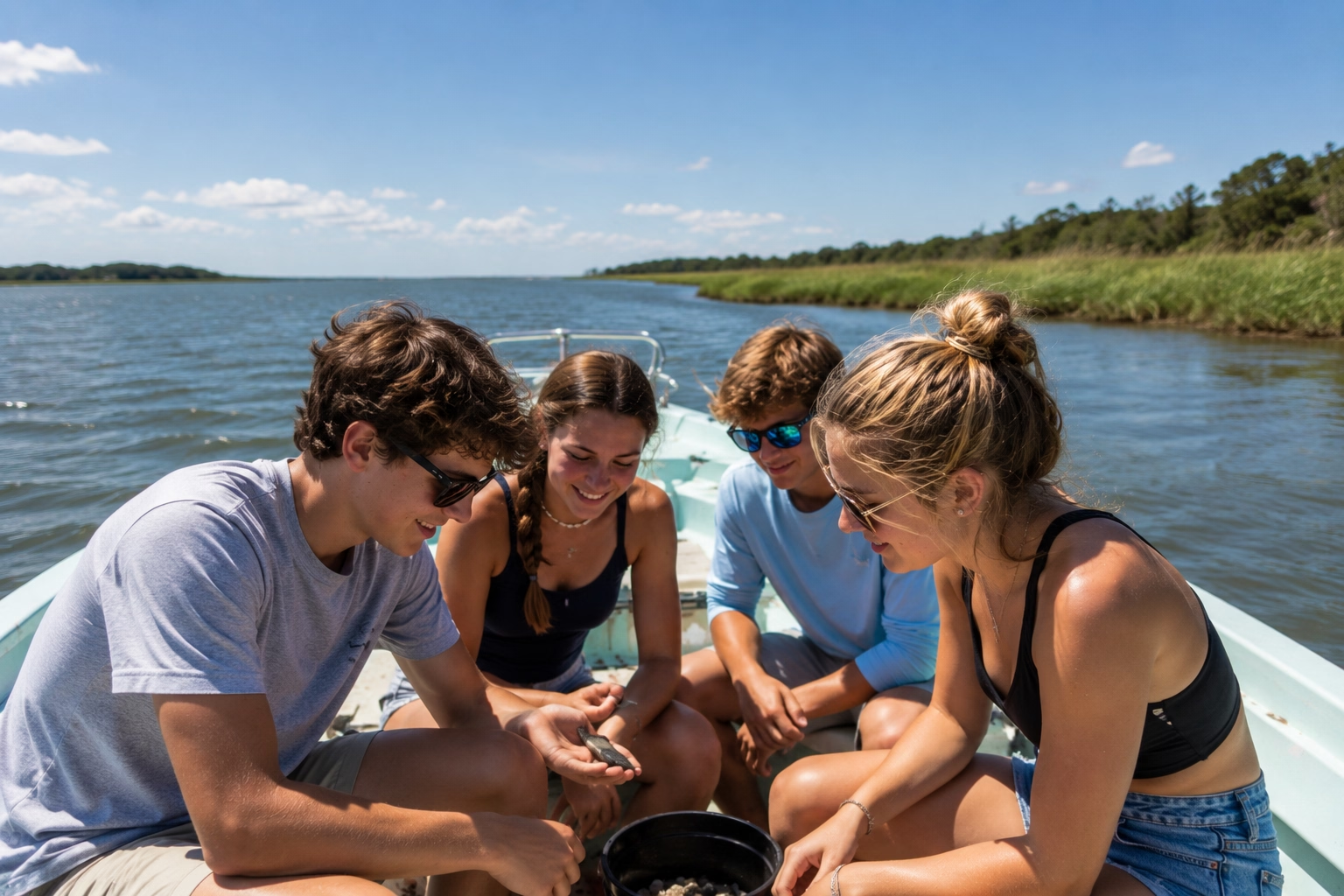
Terrapins tend to show up in the quiet tidal creeks and marsh edges around Savannah (exactly the kind of water an Eco Tour with Low Country Drifters moves through slowly enough to actually spot one).
Also, check out Skidaway Audubon; their Diamondback Terrapin Rescue Project is the greatest effort of its kind on the East Coast and has released well over 15,000 hatchlings back into the wild to date.