Spotlight on the American Oystercatcher
The Rake Nesting Specialist
The American Oystercatcher (Haematopus palliatus) is a true icon of the low country salt marsh. With its bold “tuxedo” plumage and vibrant orange bill, it is as striking as it is specialized for life along the Georgia coast.
The Art of the Rake
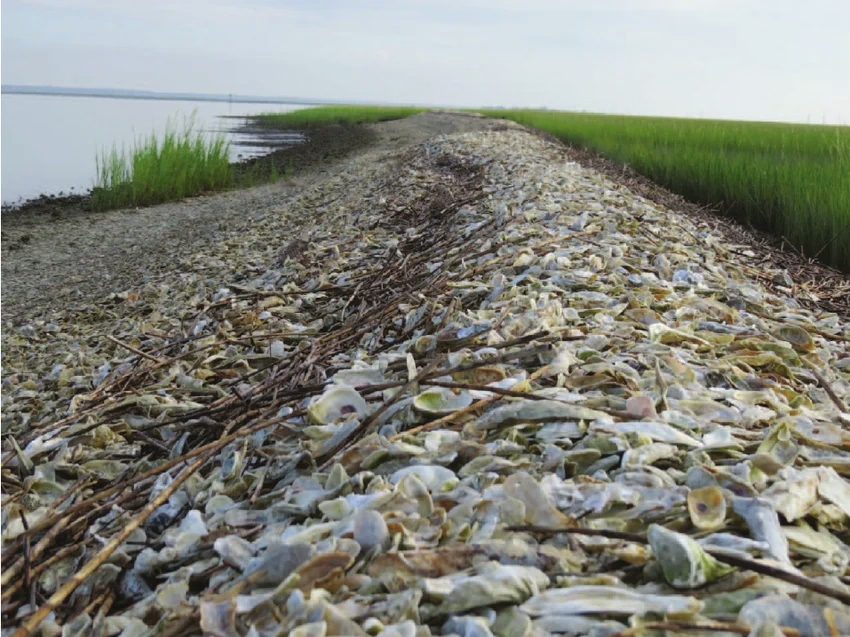
While many birds retreat to the trees, the oystercatcher relies on the unique geography of the marsh. They prefer to nest on oyster rakes—mounds of sun-bleached shells pushed up by tidal currents. For these birds, a rake isn’t just a pile of shells; it’s a high-ground fortress.
- Natural Architecture: Oystercatchers don’t use sticks or straw. Instead, they create a simple “scrape” directly into the sun-whitened shells of the oyster rake.
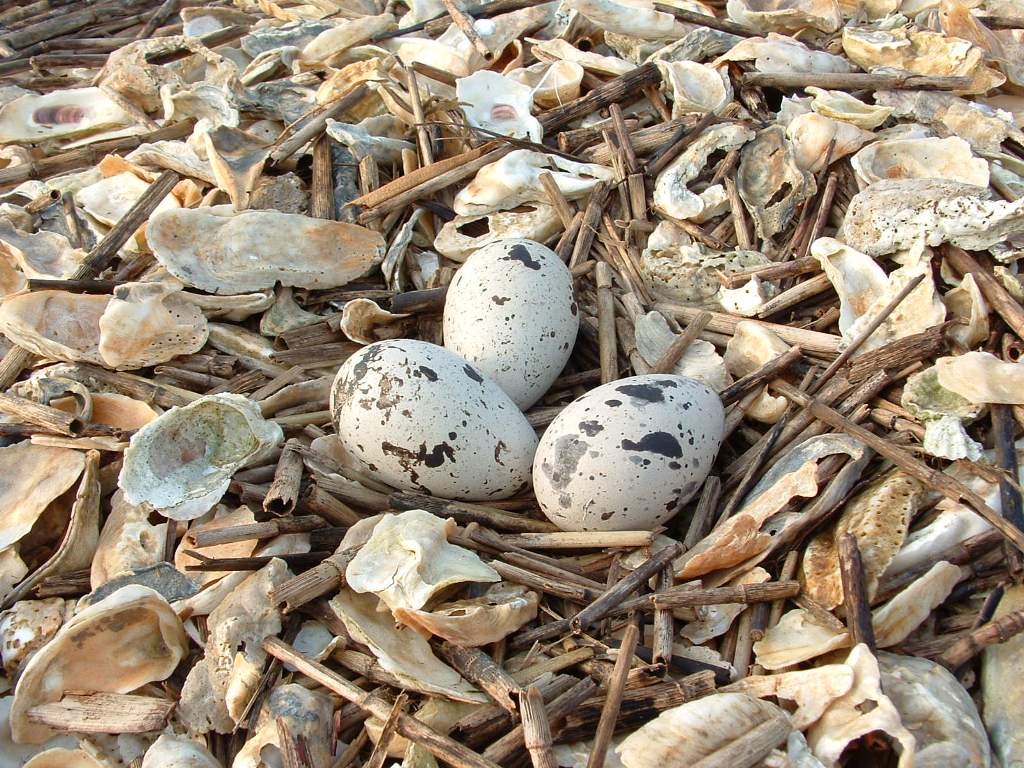
- The Power of Camouflage: The speckled pattern of their eggs mimics the texture and shadows of the broken shells, making the nest nearly impossible for predators to spot from the air.
- High Ground Advantage: Nesting on a rake provides a critical few inches of elevation. This keeps the eggs just above the reach of standard high tides while providing a 360-degree view of any approaching threats.
Fast Facts & Coastal Trivia
- The Tool-Kit Bill: Their bright orange bill is laterally compressed (flattened side-to-side) like a knife. This allows them to “stab” the adductor muscle of an oyster or clam, prying it open in seconds.
- A “Low Country” Diet: While oysters are a favorite, they are also skilled at finding mole crabs and marine worms hidden in the intertidal flats.
- Lifelong Partners: They are generally monogamous and often return to the exact same nesting territory with the same partner year after year.
- The “Double Eagle” Vision: They have incredible eyesight, allowing them to spot movement—and potential threats—from a significant distance across the mudflats.
- Salt Management: Like many marine birds, they have specialized glands above their eyes that allow them to filter excess salt from the seawater they ingest, “sneezing” it out through their nostrils.
Understanding Banding: The “Leg Tags”
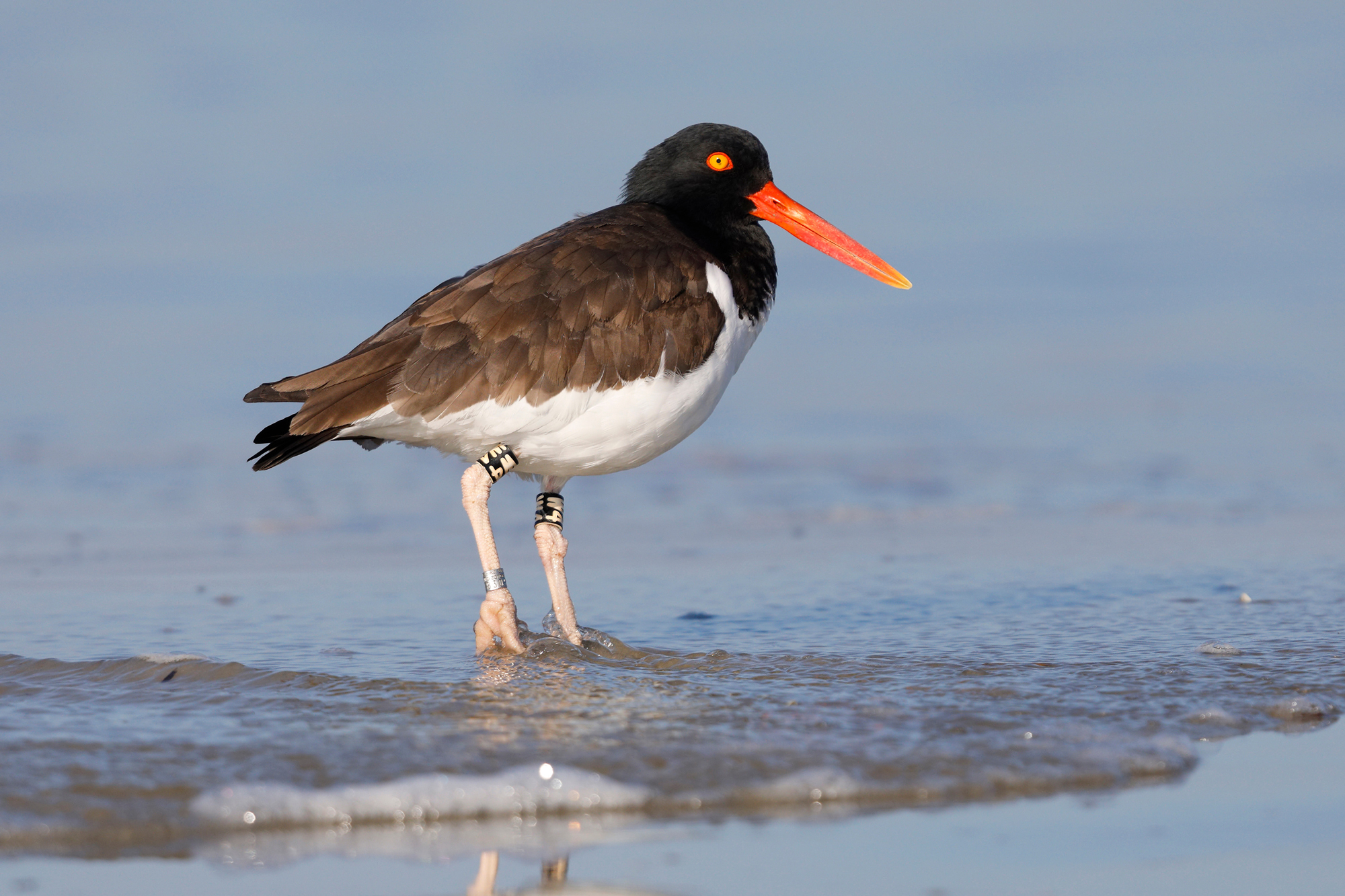
You may notice some oystercatchers sporting colorful plastic bands on their legs with unique letter-and-number codes. These are part of a massive collaborative research effort. By reporting these codes at amoywg.org, citizen scientists help biologists track survival rates, migration patterns, and how specific birds are using our local rakes. It’s like a GPS for conservation!
When to See Them
- Breeding Season (Late February – July): This is when they are most active on the rakes. Pairs begin defending their territories as early as January, with eggs usually appearing in the scrapes by mid-March. You’ll see them most clearly during this time as they aggressively guard their nesting sites.
- Wintering (August – January): During the colder months, our local population is joined by “snowbirds” migrating down from the Northeast. They form large, social flocks (sometimes hundreds of birds) that roost together on remote sandbars and shell mounds during high tide.
Conservation & Responsible Drifting
Because oystercatchers are a high-priority species, the Georgia DNR and local volunteers work tirelessly to protect them through Strategic Closures (like those at Little Tybee or Ogeechee Bar) and Elevated Nesting Platforms designed to combat rising sea levels.
Why Four-Legged Friends Stay Behind:
Even the friendliest dog looks like a predator to a shorebird. When a bird is “flushed” off a nest:
- Thermal Stress: Eggs can cook in the Southern sun or chill in the wind.
- Predation: Gulls and crows swoop in the moment a nest is unguarded.
- Crushing: Scraped nests are so well-camouflaged that they are easily stepped on by accident.
How You Can Help
- Walk the “Wet Sand”: Stay below the high-tide line to avoid the “living room” where birds nest.
- Learn the “Broken Wing” Dance: If a bird acts injured or screams a piercing “wheep!”, you are too close. Stop and slowly back away.
- Leash Up: Keeping pups away from dunes and shell mounds in spring helps ensure parents don’t abandon their eggs.
Responsible Drifting: Our CARE Promise
As CARE (Coastal Awareness & Responsible Ecotourism) Certified guides, we utilize “Responsible Drifting” techniques, using binoculars and silent, engine-off approaches, to ensure we observe these magnificent birds without ever making them take flight.