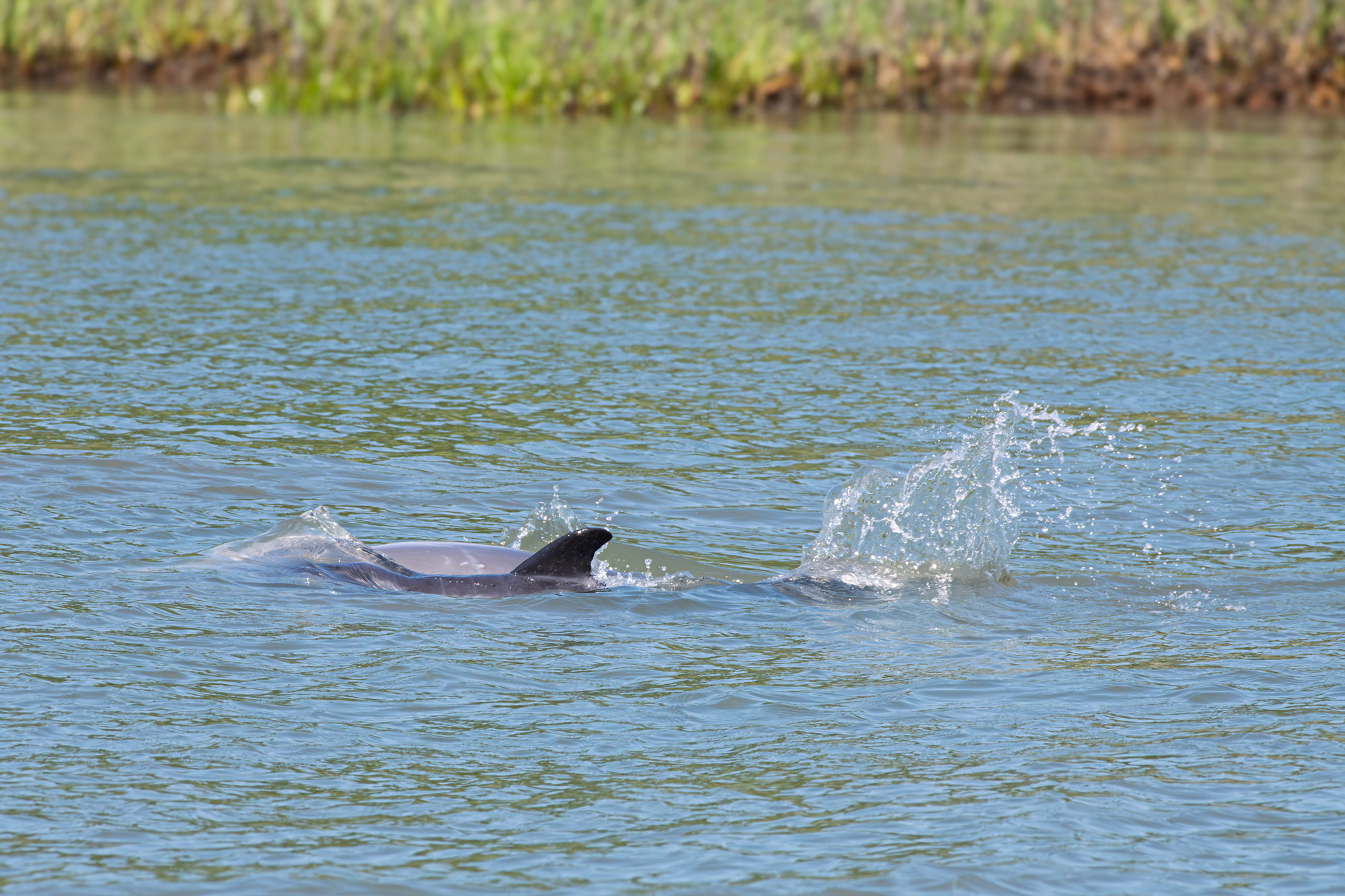
Spotlight on the Black Skimmer
The Ultimate Specialized Fisher
The Black Skimmer (Rynchops niger) is a study in contradictions—elegant yet quirky, a daytime “lounger” but a fierce nocturnal hunter. Classified as a specialized shorebird (and a close relative of gulls and terns), they are primarily migratory visitors to Georgia, arriving in the spring to nest and raise their young.
In the low country, they are primarily migratory. While some individuals may linger in the southern part of their range during mild winters, the vast majority move between summer nesting colonies on the Atlantic coast and wintering grounds further south in the Caribbean and South America.
Their Foraging Technique
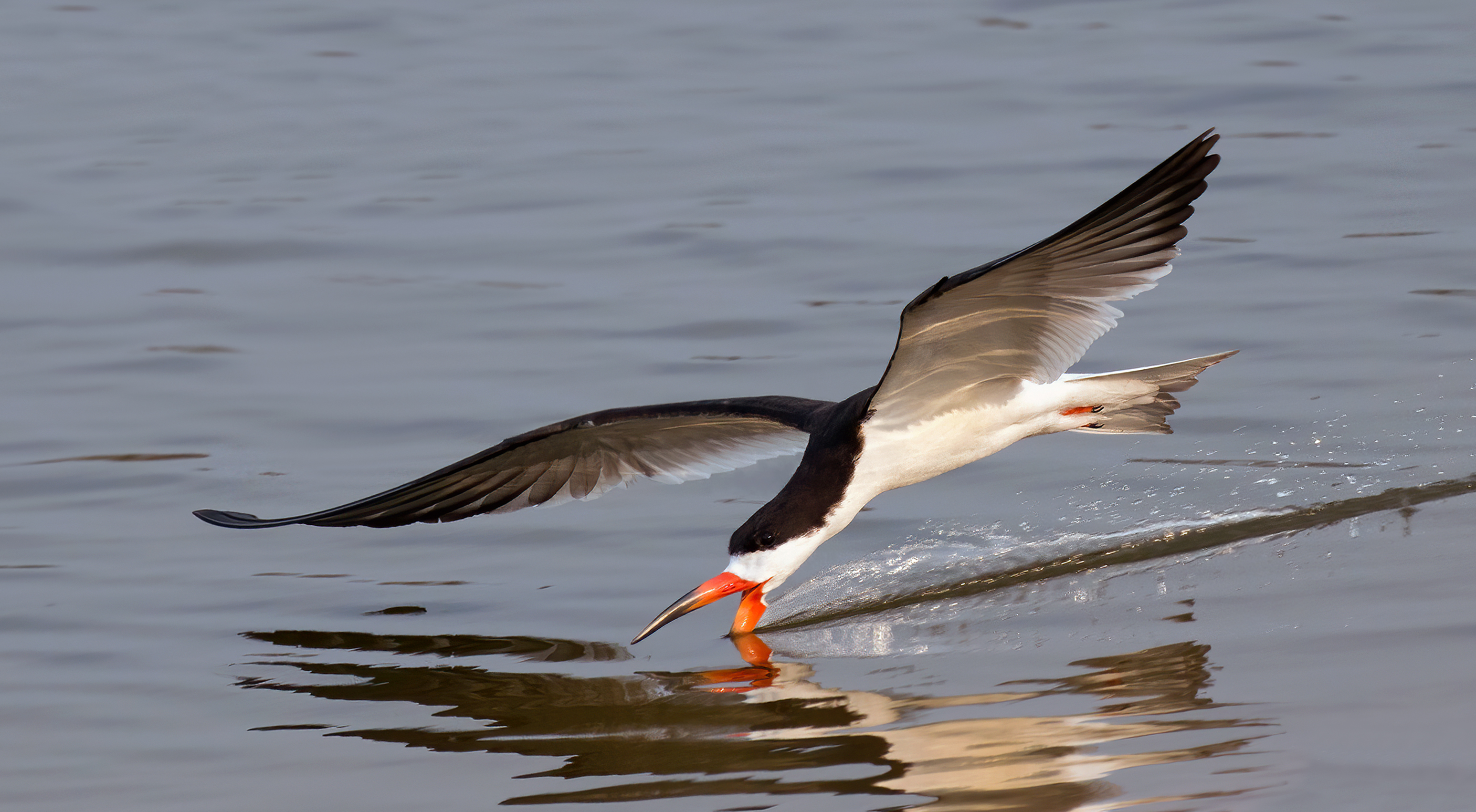
Because they do not hunt by standing in the water, they are aerial foragers. The most striking feature of the skimmer is its bill. It is the only bird in North America where the lower mandible is significantly longer than the top.
- The Technique: The bird flies incredibly low—just inches above the surface of the water—with its mouth open and the elongated lower bill cutting through the water.
- The Tactile Snap: Unlike many birds that hunt by sight, skimmers hunt by touch. When that lower bill strikes a fish, the top bill snaps shut instantly.
- Night Vision: Because they rely on touch, they are highly active at night. To handle the transition from bright beach sun to midnight hunting, they have evolved vertical, slit-like pupils—a trait they share with cats, but no other bird species.
Quick Facts & Quirky Behaviors
- Pupils Like a Cat: The Black Skimmer is the only bird species in the world known to have vertical, slit-like pupils. Similar to cats, this adaptation protects their eyes from the blinding glare of the sun on white sandbars and helps them see clearly while foraging in the dark.
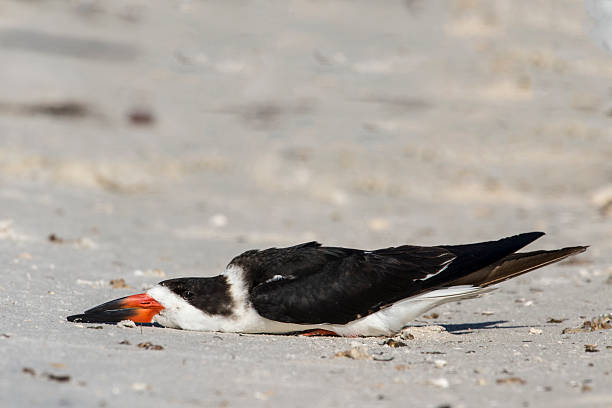
- Beach Loungers: If you see a flock of Black Skimmers resting on a sandbar, you might think they are injured or sick. They have a distinct habit of resting by laying their heads and entire necks completely flat on the sand. This behavior is perfectly normal and is thought to relieve the neck muscles that support their heavy bills.
- Colony Nesters: Black Skimmers are highly social. They nest on the ground in shallow scrapes right on the open sand, often right alongside Least Terns or Gull-billed Terns. There is safety in numbers—the entire colony will take flight to aggressively mob predators like crows, gulls, or raccoons that venture too close to their eggs.
- The “Scrape” Lifestyle: Forget nests made of twigs. A skimmer’s home is a “scrape”—a shallow bowl kicked into the sand. These are so well-camouflaged that they are practically invisible to the untrained eye, which is why staying on the wet sand is so critical for coastal visitors.
Family Life: From “Scoops” to “Skimmerlings”
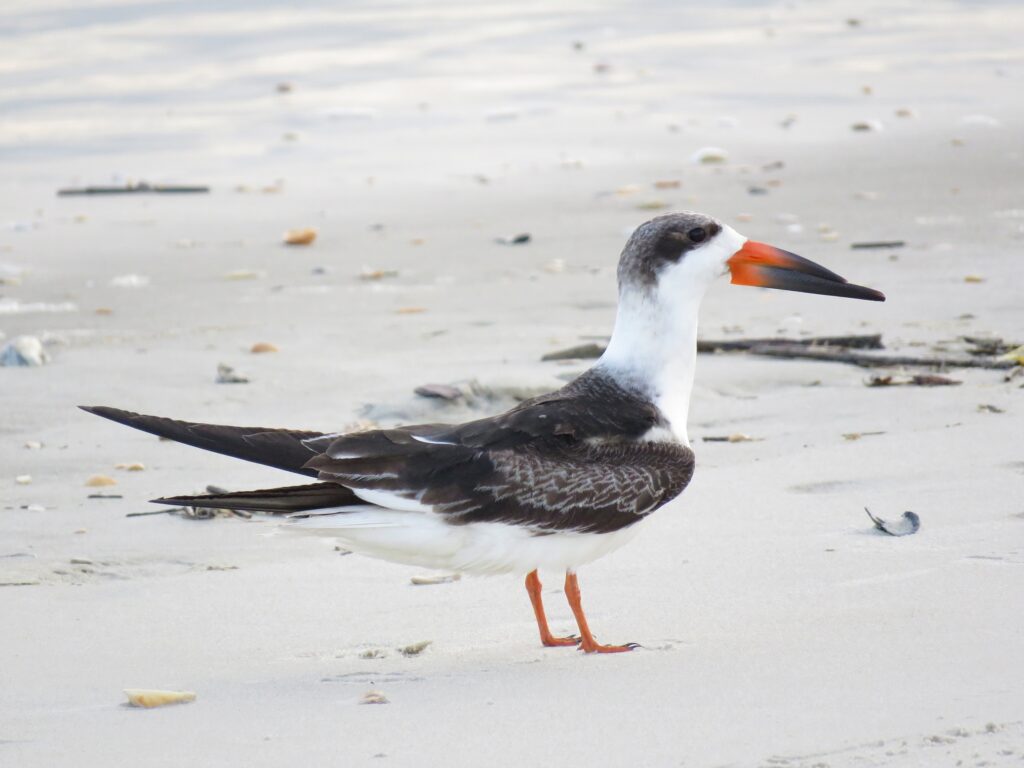
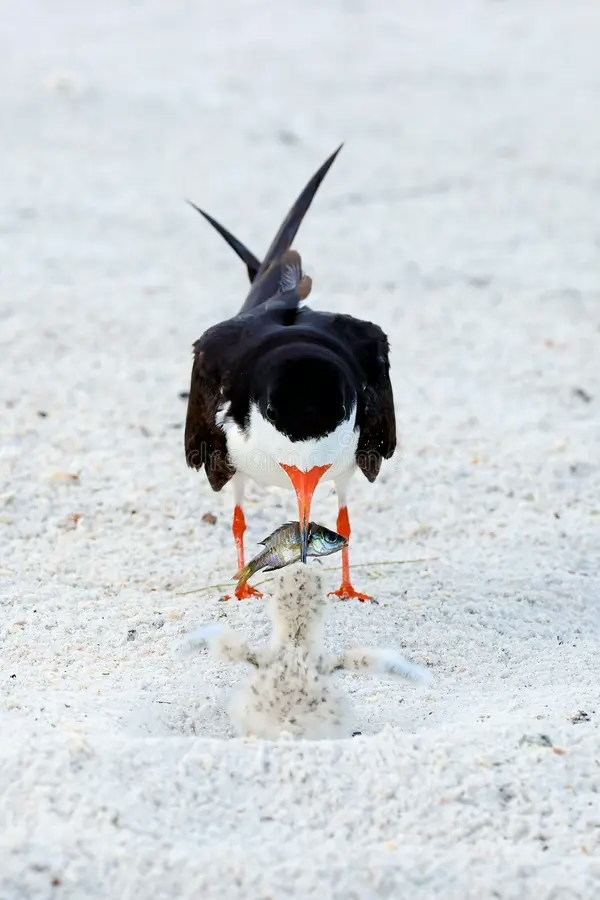
Black Skimmers are incredibly social, often found in groups known as a “scoop” or “embankment.” When it comes to the next generation, their biology is particularly clever. While the adults have mismatched bills, skimmerlings (the chicks) are born with bills of equal length. This allows them to pick up food from the ground. It isn’t until they are ready to fly and hunt for themselves that their lower bill begins to elongate into that signature “plow.”
Size & Scope
Despite their light, buoyant flight, Black Skimmers are medium-to-large birds with a surprisingly impressive reach:
- Length: 16 to 20 inches from bill to tail.
- Wingspan: A dramatic 42 to 50 inches. Their wings are exceptionally long and pointed, designed for the effortless, low-altitude gliding required for skimming.
- Weight: Approximately 9 to 13 ounces (about the weight of a grapefruit), allowing them to glide effortlessly just inches above the water’s surface.
- Camouflage: Chicks are a sandy, mottled buff color, making them nearly invisible against the shells and sand of a beach scrape. This is their primary defense against predators.
Romance on the Sandbars
Georgia isn’t just a pit stop for skimmers; it is where they come to start their families. Their courtship is a sight to behold: males will often present a “bridal gift” of a small fish to a female. If she accepts, they remain a pair for the season, working together to guard their eggs from the summer heat and hungry predators.
When and Where to Find Them in Georgia
If you are looking to see a “scoop” of skimmers, now is the time. *The Window: You can find Black Skimmers on the Georgia coast from late March through September.
- Peak Activity: May and June are particularly active as they establish nesting colonies on sandbars and remote beach flats.
- The Best Viewing: Look for them on offshore sandbars or protected beach ends during a falling tide. They are famous “beach loungers” and are often seen resting with their necks flat on the sand to support their heavy bills.
Respecting the Nest: Conservation
The Black Skimmer is a Species of High Conservation Concern. Because they nest in simple “scrapes” directly on the open sand, they are incredibly vulnerable to human activity. To ensure a positive experience for both humans and birds, keep these tips in mind:
- Give them Space: If a flock takes flight as you approach, you are too close.
- Watch the Tides: High spring tides can wash over nests, so the birds rely on high, stable ground… often the same spots people like to picnic.
- Mind the Paws: Even the most well-behaved dog can accidentally crush a camouflaged nest or stress a colony. Always respect posted nesting signs.
- Walk the Waterline: When exploring unposted beaches, stay on the wet sand to avoid stepping on camouflaged scrapes.
By practicing responsible stewardship, we can ensure that the “tactile snap” of the Black Skimmer remains a permanent fixture of our coastal summers.
2026 Seasonal Access: Protecting the Atlantic Flyway’s Finest
To ensure these birds can raise their young safely, the Georgia Department of Natural Resources (DNR) implements the Bird Island Rule. Many of the most active nesting sites are currently closed to foot traffic.
If you are out on the water, please keep a respectful distance from these high-priority nesting areas:
- Ogeechee Bar, Closed – No landing through Oct 15.
- Little Tybee Island, Restricted – Watch for seasonal signage in the dunes.
- St. Catherines Bar, Closed – Permanent sanctuary; no landing.
Responsible Drifting: Our CARE Promise
With guides who are CARE (Coastal Awareness & Responsible Ecotourism) Certified, Low Country Drifters is committed to protecting these master aerialists. Whether they are arriving after a long migration or establishing their summer colonies on our shifting sandbars, Black Skimmers depend on the low country’s quietest corners to thrive. We utilize “Responsible Drifting” techniques to ensure their delicate nesting and feeding behaviors are never interrupted:
- Observation from a Distance: Using high-powered optics to watch their unique, elongated lower mandibles slice through the glassy surface of the water without causing the flock to flush.
- Silent Approaches from Afar: By cutting the engine and allowing the tide to carry us, we provide these birds the silent buffer they need to feed, mate, and defend their nearly-invisible “scrapes” stress-free.